Part 1 — My Daughter’s Final Wish
There are moments in life that split everything into two pieces: who you were before them, and who you become afterward.
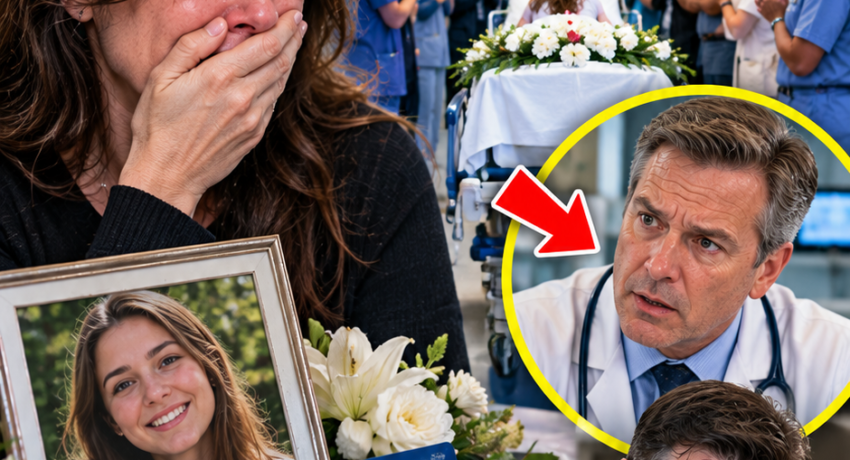
For me, that moment came in a hospital hallway, only minutes after I had walked behind my eighteen-year-old daughter’s bed during her honor walk.
I thought nothing could hurt more than losing Mary.
Then my husband disappeared after receiving a phone call, and Mary’s doctor came rushing toward me with a confession that made the floor seem to shift beneath my feet.
“Your husband begged me not to tell you the truth about your daughter.”
At first, I couldn’t even understand what he meant.
What truth could possibly be left?
Mary had been sick for nearly a year. There had been appointments, tests, medications, procedures, hopeful conversations, devastating conversations, sleepless nights, and mornings when I woke on a hospital chair forgetting for half a second where I was.
My husband, Jonathan, had been beside us through all of it.
Jonathan wasn’t Mary’s biological father. He came into our lives when she was six years old, and he never once treated her as anything less than his own child.
He attended school plays and parent-teacher meetings. He taught her how to ride a bike. When she was thirteen and furious with the world, he was the one who could make her laugh.
She called him Dad.
He had earned that name.
And until the day Mary died, I believed there was nothing about my daughter Jonathan would ever keep from me.
I was wrong.
A few weeks before Mary passed away, the three of us were sitting together in her hospital room.
She barely touched the food on her tray. She had been quieter than usual that evening, staring through the window while the sunset faded between the buildings.
Then she turned toward me.
“Mom?”
I looked up from my coffee.
“What is it, sweetheart?”
“If I don’t make it, I want to donate my organs.”
My hand froze around the paper cup.
“Don’t say that.”
“Mom.”
“No.” I shook my head immediately. “We’re not talking like that.”
She gave me the small, patient smile she had started giving me whenever I insisted everything was going to be fine.
“I’m serious.”
Her voice was remarkably steady.
Mine wasn’t.
“Mary…”
“If someone else could go home because of me, I want that.”
I stared at her.
She continued quietly.
“I don’t want another family sitting in a hospital room feeling the way we do if there’s something I can do to help them.”
My throat closed.
I wanted to tell her there would be no donation because she would get better. I wanted to promise her that this was temporary, that soon we would complain about traffic and grocery prices and laundry again.
Instead, I reached for her hand.
And cried.
Jonathan sat on the other side of the bed. He didn’t try to stop her. He didn’t tell her she was being morbid or giving up.
He simply nodded.
“If that’s what you want,” he said softly, “then I support you.”
For days, I resisted.
Signing those papers felt like admitting something I wasn’t ready to admit.
Mary, however, never changed her mind.
Eventually, I realized that agreeing to her wish wasn’t the same as giving up hope.
So I signed.
Three weeks later, my daughter was gone.
And the wish I had prayed would never matter suddenly became the last decision she had ever made.
Part 2 — The Honor Walk
Before Mary was taken for the donation procedure, the hospital organized an honor walk.
I had heard the term before, but I had never imagined I would participate in one.
Doctors, nurses, technicians, and hospital staff stood silently along both sides of the hallway.
Some lowered their heads.
Some placed their hands over their hearts.
A few had tears in their eyes.
And between them, Mary’s bed moved slowly forward.
Jonathan and I followed behind her.
I remember almost nothing about those minutes clearly.
Grief had turned the world strange.
Sounds seemed distant. Faces blurred. My legs moved because someone had told them where to go, not because I was consciously walking.
I kept staring at Mary.
My beautiful girl.
Eighteen years old.
She should have been choosing colleges, arguing with me about curfews, borrowing clothes without asking, and making ridiculous plans with friends.
Instead, an entire hospital corridor stood in silence because she had chosen to give strangers a chance at life.
Halfway down the hallway, I broke.
Jonathan wrapped his arm around me as I buried my face against his chest.
“She did something beautiful,” he whispered.
I clung to him.
For that brief moment, he was the only thing keeping me upright.
Then his phone rang.
He ignored it at first.
It rang again.
Finally, he pulled it from his pocket and looked at the screen.
I felt his body stiffen.
All the color seemed to leave his face.
“I—I need to go downstairs.”
I lifted my head.
“What?”
He was already stepping away.
“Jonathan, what is it?”
“I’ll be back.”
“Back from where?”
But instead of answering, he hurried down the hallway.
I watched him disappear around the corner.
My husband had just left me standing alone moments after our daughter’s honor walk.
I couldn’t understand it.
My grief turned instantly into confusion, then anger.
I was still holding the small ribbon someone from the hospital had pinned to my sleeve when I heard rapid footsteps behind me.
“Mrs. Carter! Wait!”
I turned.
Mary’s doctor was hurrying toward me.
I had known him for months. He was usually calm, careful, almost impossible to read.
That afternoon, however, he looked deeply uncomfortable.
“Is something wrong?” I asked.
He stopped in front of me, catching his breath.
“I need to speak with you.”
My heart began pounding.
“About Mary?”
His gaze moved toward the corridor where Jonathan had disappeared.
Then he said the words I would replay in my head for weeks afterward.
“Your husband begged me not to tell you the truth about your daughter.”
My stomach dropped.
“What truth?”
He hesitated.
“Did something happen before she died?” I demanded. “Was there something you didn’t tell me?”
“Yes,” he said carefully. “But not the way you’re thinking.”
He guided me toward a row of chairs.
I sat because suddenly I wasn’t certain my legs could hold me.
The doctor remained standing for a moment.
“I had hoped I wouldn’t have to discuss this with you today,” he said. “I respected your husband’s reasons for asking me to remain quiet. But after everything that has happened, I don’t feel right saying nothing.”
My hands began shaking.
“Please. Just tell me.”
He inhaled slowly.
“Before Mary passed away, she asked questions about whether one of her donated organs could potentially go to a particular person.”
I stared at him.
“A particular person?”
“Yes.”
“Who?”
“I can’t give you another patient’s identity. That information is confidential.”
My mind started racing.
And almost immediately, it landed on Jonathan.
His private calls.
The times he had stepped into the hallway while Mary was sleeping.
The conversations he ended whenever I entered a room.
The way he had just looked at his phone and vanished.
A terrible thought entered my mind.
“Was Jonathan involved?”
The doctor didn’t answer.
“Did he ask Mary to do this?” I pressed. “Did he pressure my daughter while she was dying to help someone?”
His expression tightened.
“I’ve already said more than I probably should.”
“Doctor—”
“Please talk to your husband.”
Then he walked away.
And I sat there alone, wondering whether the man I trusted most had been keeping a secret from me while our daughter was dying.
Part 3 — The People in the Waiting Room
I found Jonathan on the third floor.
He was sitting in a small family waiting room with two people I had never seen before.
A middle-aged woman sat across from him, pressing a tissue against her mouth while tears slipped down her cheeks.
A man beside her kept one arm around her shoulders.
All three of them looked as though they had been waiting for something important.
Jonathan noticed me in the doorway.
His face went pale.
“Grace.”
“What is going on?”
He stood.
“I can explain.”
“Then do it.”
My voice came out colder than I intended, but I didn’t care.
“Mary’s doctor just told me she asked whether one of her organs could go to someone specific. He also told me you asked him to keep it from me.”
Jonathan said nothing.
I glanced at the couple.
“Does this involve them?”
His silence told me everything I needed to know.
“Who are they?”
“Grace…”
“If you love me, don’t lie to me now.”
“I didn’t lie about Mary’s illness,” he said quickly. “I never hid anything about her treatment or condition.”
“Then what did you hide?”
Jonathan looked at the couple, then back at me.
“Mary wanted to tell you herself.”
“What does that mean?”
Instead of answering, he reached into the inside pocket of his jacket.
When his hand came out, he was holding a folded piece of paper.
One word was written on the front.
Mom.
I knew that handwriting.
I would have recognized it anywhere.
The anger inside me disappeared for one terrible second, replaced by a pain so sharp I could barely breathe.
“When did she write this?”
“Last week.”
My eyes snapped toward Jonathan.
“You’ve had a letter from my daughter for a week?”
His face crumpled.
“She made me promise not to give it to you until afterward.”
“After she died?”
He lowered his head.
I took the letter from him.
My fingers trembled around the paper.
“I need to read this alone.”
“Grace, please—”
I walked away before he could finish.
The hospital chapel was empty.
I sat in the final row and stared at my name on the folded page for several minutes before I found the courage to open it.
Then I began to read.
Mom,
If you’re reading this, it means something I was hoping for actually happened.
I stopped.
Something she had hoped for?
After everything my daughter had endured, what could she possibly have been hoping would happen after her death?
I forced myself to continue.
During treatment, I became friends with a girl named Sophie. We played cards whenever we were both too tired to do much else. She cheats sometimes, but she makes me laugh, so I forgive her.
Despite everything, I could almost hear Mary saying it.
Then I read the next lines.
Sophie told me she had been waiting almost two years for a transplant. At first, I just saw her as another girl trapped in a hospital like me.
Then I started noticing her mom.
My eyes filled.
She sits in waiting rooms the way you do. She studies doctors’ faces before they even start speaking. She buys coffee and forgets to drink it. She tries to act brave because she thinks Sophie needs her to be brave.
One day I realized I wasn’t only looking at her.
I was looking at us.
My vision blurred completely.
Because I knew exactly what Mary meant.
I had spent months watching doctors’ expressions.
I had carried cups of coffee around until they went cold.
I had smiled when I wanted to scream.
I had believed that if I showed enough confidence, perhaps the universe would believe me and let my daughter come home.
Mary had seen all of it.
She had seen me more clearly than I had realized.
Part 4 — The Secret Mary Asked Him to Keep
I wiped my eyes and continued reading.
That’s when I asked Dad to help me find out whether there was any chance one of my organs could go directly to Sophie if I didn’t make it. He helped me ask the right people and understand the process.
Then came the sentence that made me close my eyes.
Dad told me I should tell you.
I pressed my lips together.
I said no.
Not because I trusted him more than you. Please never think that.
I didn’t tell you because you were still talking about me coming home.
My breath caught.
I remembered saying those words almost every day.
When you come home, I’ll make your favorite breakfast.
When you come home, we’ll watch that movie.
When you come home, you can sleep for a week if you want.
Every sentence had begun with when.
Never if.
Mary had always smiled.
Now I understood that she had known something I refused to face.
I knew you needed that hope, Mom.
And I couldn’t make you sit beside me hoping I would live while also wondering whether another daughter might survive because I didn’t.
I lowered the letter into my lap.
That was the secret.
Mary hadn’t shut me out.
She hadn’t chosen Jonathan over me.
She had been protecting me.
Even while dying, my daughter had been worried about how much pain I could carry.
Then I reached the words that shattered whatever strength I had left.
I couldn’t go home with you, Mom.
But I hoped I could help Sophie go home with hers.
A sound escaped me before I could stop it.
I pressed the letter against my chest and cried until breathing hurt.
At the bottom of the page, Mary had added one final request.
Please don’t be too angry with Dad. He hated keeping this from you. I made him promise.
I love you.
Mary
The chapel door opened quietly.
Jonathan entered but didn’t sit beside me.
Instead, he lowered himself onto the bench one row behind mine, leaving space between us.
For several moments, neither of us spoke.
Finally, I said, “You still should have told me.”
“I know.”
I turned toward him.
“How could you keep something this big from me?”
His eyes were red.
“Because she asked me to.”
“She was eighteen, Jonathan.”
“I know.”
“She was my daughter.”
“She was mine too.”
The words weren’t defensive.
They were broken.
Jonathan looked down at his hands.
“For nearly a year, Mary had doctors deciding when she could eat, when she could sleep, what medicine she needed, which tests she had to take, when someone could come into her room…”
His voice cracked.
“She felt like she had no control over anything anymore.”
I said nothing.
“This was one thing she could choose for herself.”
He wiped his eyes.
“She asked me not to take that choice away from her.”
The anger in me didn’t disappear.
But something else began to exist beside it.
Understanding.
“The people upstairs,” I whispered. “Who are they?”
“Sophie’s parents.”
I looked at him.
“And Sophie?”
“She’s in surgery right now.”
“For a transplant?”
Jonathan nodded.
“A kidney.”
“Mary’s?”
“The doctors aren’t going to officially tell us that. But given the timing…”
He didn’t finish.
He didn’t have to.
I looked again at my daughter’s handwriting.
“Why did you ask her doctor not to tell me?”
“Because I promised Mary.”
He covered his face briefly.
“I wanted to tell you every day, Grace. Especially when you kept saying she would come home. I almost broke the promise more than once.”
“Why didn’t you?”
“Because when Mary asked me to keep it, she looked at me and said, ‘Dad, I need this one thing to be my decision.’”
His voice collapsed.
“How was I supposed to say no to her?”
I folded Mary’s letter carefully along the original creases.
I was still furious.
I was still devastated.
But now I could see that keeping Mary’s secret had hurt Jonathan too.
I stood.
“I want to meet Sophie’s parents.”
Part 5 — “You’re Allowed to Be Happy”
When we returned to the waiting room, the couple immediately stood.
Jonathan spoke quietly.
“Grace, this is Ellen and Mark. Sophie’s parents.”
Ellen took a hesitant step toward me.
Her eyes were swollen from crying.
“I’m so sorry.”
I frowned.
“For what?”
She struggled to answer.
Then she looked at me and said something I never expected.
“For being happy today.”
I stared at her.
Tears spilled down her cheeks.
“I don’t know how else to explain it. This is probably the worst day of your life. And we received the call we’ve been praying for.”
Her voice broke.
“I feel horrible that our hope had to arrive on the same day as your grief.”
That was when I noticed the coffee beside her.
Untouched.
Cold.
Her fingers were twisting around the hospital bracelet on her wrist.
She kept glancing toward the doorway every time footsteps approached.
And suddenly I saw what Mary had seen.
I saw myself.
Another mother sitting in a hospital waiting room, searching every passing face for good news.
Another mother silently begging for permission to take her child home.
“You’re allowed to be happy,” I said.
Ellen stared at me.
Then she began to cry harder.
“Mary wanted this.”
She covered her mouth.
“Sophie told us Mary had been asking questions,” she said. “But we didn’t know what would happen. Jonathan never promised us anything.”
I looked at him.
Mark nodded.
“He was very clear. He told us not to build our hopes around it. He said every decision depended on the medical team and circumstances.”
That was Jonathan.
Careful.
Practical.
Carrying something enormous while trying not to let anyone else feel its full weight.
“How close were Mary and Sophie?” I asked.
Ellen managed a fragile smile.
“Closer than we realized.”
She told me stories.
Once, a nurse had separated the girls because they were laughing so loudly they woke another patient.
Another time, Sophie had hidden Mary’s cards because Mary accused her of cheating.
“They argued for ten minutes,” Ellen said. “Then five minutes later they were sharing cookies.”
A laugh escaped me.
It surprised everyone in the room, including me.
And for the first time since Mary died, someone was speaking about my daughter as an eighteen-year-old girl.
Not a patient.
Not a donor.
Not a tragedy.
Mary.
My Mary.
“Your daughter talked about you constantly,” Ellen said.
My heart tightened.
“What did she say?”
Ellen smiled.
“That you worried too much.”
I almost laughed again.
“She was right.”
“She also said you pretended you weren’t crying whenever you left her room.”
My smile faded.
Of course Mary had noticed.
“And she said,” Ellen continued gently, “that whenever she was frightened, she thought about going home with you.”
I looked down at the letter in my hands.
My brave daughter had been afraid.
She simply hadn’t wanted me to know how afraid.
At that moment, a nurse appeared in the doorway.
“Mr. and Mrs. Bennett?”
Ellen and Mark shot to their feet.
The room seemed to stop breathing.
The nurse smiled.
“Sophie is out of surgery.”
Ellen grabbed Mark’s hand.
“She’s stable. The surgeon will come speak with you soon.”
For a moment, neither parent moved.
Then Ellen made a sound somewhere between laughter and a sob, and Mark pulled her into his arms.
I watched relief wash over her face.
Pure, overwhelming relief.
Then she looked at me.
And almost immediately, guilt replaced it.
I stood.
“Go.”
She hesitated.
“Grace…”
“Go to your daughter.”
She walked toward me, then stopped, uncertain whether touching me would be appropriate.
So I made the decision for her.
I wrapped my arms around her.
Ellen clung to me.
“Thank you,” she whispered.
I pulled back.
“Don’t thank me.”
She looked confused.
“This wasn’t my decision.”
I held up the folded letter.
“It was hers.”
Ellen began crying again.
“Then I will never forget her.”
Mark stepped closer and placed his hand gently over mine.
“We won’t let Sophie forget her either.”
Those words hurt.
But they also gave me something I hadn’t known I needed.
Mary would continue to exist in someone else’s stories.
Not merely as the girl who died.
But as the funny eighteen-year-old who played cards, laughed too loudly, loved fiercely, and gave another daughter a chance to go home.
Part 6 — What Mary Left Behind
Ellen and Mark followed the nurse down the hallway.
Jonathan and I stood together watching them leave.
For a long moment, we said nothing.
Eventually, I turned to him.
“I’m still angry.”
He nodded.
“I know.”
“You kept something enormous from me.”
“I know.”
“I don’t know whether I would have made the same choice.”
“I understand.”
I looked at him.
“But now I understand why you made it.”
His eyes filled.
That was not forgiveness.
Not yet.
Some wounds cannot be closed in a single conversation, especially on the worst day of your life.
But I reached for his hand anyway.
And he held mine.
Together, we walked back toward Mary’s room.
It was empty.
Only a few hours earlier, I had followed my daughter through a hospital hallway believing I was witnessing the final chapter of her life.
But Mary had understood something I hadn’t.
She couldn’t control what illness had done to her.
She couldn’t choose whether she stayed.
But she could choose something about what she left behind.
Somewhere else in that hospital, Sophie was beginning to wake up.
Soon, Ellen would sit beside her bed.
She would probably hold her hand.
She would watch the monitors.
And eventually, if everything went well, she would begin making plans to take her daughter home.
The same kind of plans I had made for Mary until the very end.
Mary’s gift did not make losing her easier.
Nothing ever could.
Another girl surviving did not somehow balance the universe or make my daughter’s death acceptable.
Grief does not work like that.
I would still wake in the morning and, for one terrible second, forget she was gone.
I would still reach for my phone when something funny happened before remembering there was no one to text.
I would still pass her bedroom and expect to hear music behind the door.
I would still have days when knowing Sophie was alive wouldn’t be enough to keep me from wanting my own daughter back.
But I finally understood what Mary had been trying to give me.
She wasn’t trying to give me a reason for her death.
There could never be one.
She was giving me something to hold onto afterward.
My daughter had spent her final days thinking about a frightened girl in another hospital room and a mother who sat beside her with untouched coffee, desperately hoping for good news.
Mary had recognized our story in theirs.
And when she realized she might not get the ending I had prayed for, she chose to help another mother receive hers.
I unfolded Mary’s letter one last time and read the sentence that would remain with me forever:
I couldn’t go home with you, Mom. But I hoped I could help Sophie go home with hers.
That was Mary.
Even at eighteen.
Even when life had been terribly unfair to her.
Even when she had every right to think only about herself.
She was still looking for a way to make someone else’s world a little less painful.
I pressed the letter against my heart.
Then I closed my eyes and pictured Sophie someday walking through her own front door, with her mother beside her.
And for the first time since Mary left me, my grief carried something else inside it.
Not peace.
I wasn’t ready for that.
But meaning.
My daughter could not come home with me.
So, in the final choice that was truly hers to make, she helped another daughter find her way home.