Part 1 — The Voice That Woke Me at Two in the Morning
“I made that.”
Claire’s voice drifted upstairs so clearly that I woke almost instantly.
For a few confused seconds, I stared into the darkness, trying to remember where I was.
Then everything settled back into place.
My parents’ house.
The guest bedroom I had slept in hundreds of times growing up.
The old quilt Mom insisted on putting on the bed because she said the newer one was “too scratchy for company.”
And Claire—my fiancée—who was supposed to be asleep beside me.
Except her side of the bed was empty.
Downstairs, I heard her again.
This time, her voice sounded sharper.
“How do you have this?”
My mother answered, but so softly that I couldn’t understand the words.
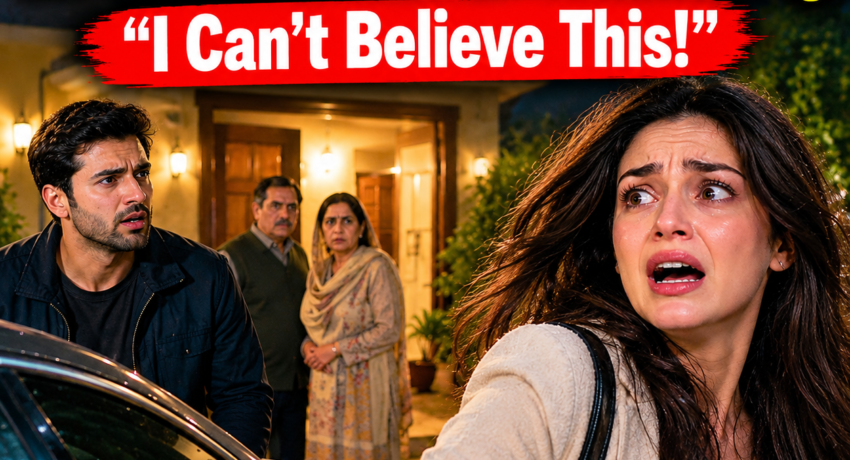
Then Claire shouted.
“I can’t believe it!”
I threw off the covers.
By the time I reached the bottom of the stairs, the front door was already flying open.
Claire ran onto the porch barefoot, wearing nothing but the oversized T-shirt she had slept in.
“Claire!”
She didn’t stop.
Didn’t turn.
Didn’t even seem to hear me.
Then Mom rushed past me.
She was barefoot too.
“No!” she cried. “Please—wait!”
Claire reached our car.
Mom ran after her.
And then my mother called something that stopped me colder than the night air.
“Cee-Cee!”
Claire froze for half a second.
That was all.
Then she yanked open the car door, climbed inside, and started the engine.
Gravel sprayed behind the tires as she backed out of the driveway.
“Claire!”
The car shot down the road.
Within seconds, the taillights disappeared into the darkness.
I stood in the driveway, stunned.
Mom had stopped several feet away from me.
One hand covered her mouth.
Her shoulders were trembling.
“What just happened?” I demanded.
She didn’t answer.
I stepped closer.
“Mom.”
Her eyes finally met mine.
“Who is Cee-Cee?”
Her face crumpled.
Then she looked toward the road where Claire had vanished.
“Rick,” she whispered, “there’s something you need to know before you go after her.”
And somehow, that frightened me even more than watching Claire drive away.
Part 2 — The Visit We Had Waited Three Years For
Nothing about the evening had warned me this was coming.
Claire and I had been together for three years.
We were engaged.
We had talked about wedding dates, guest lists, whether we wanted a small ceremony or the kind of gathering that would make both our families spend too much money.
But somehow, through a ridiculous combination of work schedules, illnesses, holidays, canceled flights, and plain bad timing, Claire had never actually met my parents face-to-face.
Not until that Friday.
Mom never held the delay against her.
In fact, she had practically adopted Claire from a distance.
She sent birthday cards.
Asked what she wanted for Christmas.
Remembered little things Claire mentioned during phone calls.
Once, Mom called me specifically because she had found a recipe for lemon cake and remembered Claire saying she loved it.
So when we finally pulled into my parents’ driveway, Mom came outside before I had even shut off the engine.
“Claire!”
She hurried around the car and hugged her.
Claire laughed.
“Hi, Julie.”
Mom pulled back just enough to look offended.
“Julie?”
Claire blinked.
“Should I call you something else?”
“After three years of phone calls? Absolutely. I’ve earned a hug and at least temporary promotion from Julie.”
Claire laughed harder.
“You’re already hugging me.”
“I know.”
Dad was standing in the doorway, shaking his head.
“She practiced this.”
Mom pointed at him.
“I did not.”
“You cleaned the guest bathroom twice.”
“Go away, Ted.”
By dinner, all my anxiety had disappeared.
Dad burned one side of the steaks.
Mom complained that he had turned perfectly good meat into roofing material.
Claire told them stories about the tiny apartment she had lived in after college.
Dad showed her photographs of me with a bowl haircut I had spent years pretending never existed.
At one point, I looked across the table at the three of them laughing and felt a wave of relief.
I had worried for nothing.
They liked Claire.
Claire liked them.
She fit.
Everything felt easy.
Natural.
Right.
And now, less than seven hours later, my fiancée had fled my parents’ house barefoot at two in the morning.
I looked at Mom.
“Tell me what happened.”
She glanced toward the house.
“Come inside.”
“No.”
“Rick—”
“My fiancée just ran away from here screaming. You called her some name I’ve never heard before. Tell me now.”
Dad appeared in the doorway wearing his robe.
“What’s going on?”
Mom closed her eyes.
Then she said quietly:
“She found the star.”
Dad stopped moving.
“What star?”
Mom didn’t answer.
She simply turned toward the house.
This time, I followed.
Part 3 — The Purple Star Behind the Shelf
The downstairs storage room was tucked behind the laundry area.
Mom kept everything there.
Christmas decorations.
Old sewing supplies.
Boxes of photographs.
School projects she refused to throw away.
Broken ornaments with “sentimental value.”
Basically, anything Dad had tried unsuccessfully to convince her was junk.
One of the heavy shelves had been pulled several inches away from the wall.
Behind it, near the baseboard, was a faded drawing.
A purple star.
At least, I think it was supposed to be a star.
It had six uneven points.
A yellow blob filled the middle.
And beneath it were three faded marks written in an adult hand:
C. AGE 5.
I stared at the wall.
“That?”
Mom lowered herself into the old desk chair.
“That’s what Claire found.”
I looked at her.
“What does this have to do with Claire?”
Mom rubbed both palms against her pajama pants.
“When she was little, she didn’t call herself Claire.”
My stomach tightened.
“What did she call herself?”
Mom looked at me.
“Cee-Cee.”
The room seemed to change around me.
I laughed once, but there was no humor in it.
“That’s impossible.”
Mom’s eyes filled.
“No.”
“You’ve never met Claire before.”
“Not as an adult.”
Behind me, Dad sat heavily on the edge of an old chair.
I stared from one of them to the other.
“What are you saying?”
Mom pointed toward the wall.
“About twenty-four years ago, your father and I were helping with emergency placements through a local family-support program.”
I remembered pieces of that.
Not clearly.
When I was little, different children occasionally stayed in our home for a few nights.
Sometimes a weekend.
Sometimes longer.
Mom and Dad weren’t long-term foster parents, but they helped when families had emergencies and a child needed somewhere temporary and safe.
I barely remembered most of those kids.
I spent many summers at my grandparents’ house.
Mom continued.
“Claire stayed here.”
I looked at the purple star again.
“No.”
“Eleven days.”
I turned toward her.
“Claire lived in this house?”
“Yes.”
“For eleven days?”
Mom nodded.
“When she was five.”
My mind resisted the idea.
Claire had slept in this house.
Eaten at our table.
Drawn on that wall.
And somehow, neither of us had known.
“When did you realize it was her?”
Mom looked miserable.
“I didn’t know from your pictures. She looks completely different now, obviously. And Claire is common enough that nothing about the name made me think of her.”
“Then tonight?”
“She came downstairs. I heard something moving and found her in here.”
Mom looked toward the displaced shelf.
“She had pulled that away from the wall.”
“What did she say?”
“She stared at the star and whispered, ‘I made that.’”
Mom swallowed.
“Then she asked me how we had it.”
I already knew the rest.
“You called her Cee-Cee.”
Mom nodded.
“And she ran.”
I pulled out my phone.
My hands were shaking.
I wanted to call Claire.
I wanted to call ten times.
Twenty.
I wanted to get in Dad’s truck and start driving until I found her.
Instead, I typed only:
ARE YOU SAFE?
Three dots appeared almost immediately.
Then:
YES.
A second message arrived.
PLEASE DON’T COME YET.
Every instinct in me screamed against obeying.
But this wasn’t about what I wanted.
So I typed:
OKAY. TELL ME WHEN I CAN.
The reply came after nearly a minute.
I WILL.
I lowered the phone.
Then looked at my mother.
“What happened to her here?”
Dad leaned forward.
“Nothing bad.”
My anger exploded.
“She just ran from this house like she’d seen a ghost!”
“I know.”
“Then stop telling me nothing happened.”
Mom flinched.
And suddenly I realized something.
She wasn’t crying because Claire had found the star.
She was crying because she remembered what happened after Claire drew it.
Part 4 — Eleven Days a Five-Year-Old Never Understood
Mom stared at the floor.
“Claire’s mother needed emergency surgery.”
I waited.
“Her aunt was the closest relative who could take her, but she lived in Oklahoma. She couldn’t get here immediately.”
“So Claire stayed with you.”
“Yes.”
“Was she sick?”
“No.”
“Was she hurt?”
“No.”
“Did anybody in this house ever hurt her?”
Mom’s head snapped up.
“Absolutely not.”
“Then what happened?”
Mom looked toward the crooked purple star.
“Maybe nothing that looked terrible to us.”
The way she said it made my chest tighten.
“She was frightened when she arrived,” Mom continued. “She kept asking for her mother. She didn’t understand why she couldn’t see her.”
Dad spoke quietly.
“She barely ate the first day.”
“But after a few days,” Mom said, “she started settling in.”
She smiled faintly through her tears.
“She followed me everywhere. Sat on the kitchen counter while I cooked. Asked approximately a thousand questions before breakfast.”
Dad gave a tiny laugh.
“That sounds right.”
I almost smiled.
Claire still asked questions when she was anxious.
Lots of them.
Mom continued.
“She drew that star one afternoon while I was sorting storage boxes.”
I looked at the wall.
“You let her draw on it?”
“I didn’t exactly let her.”
For half a second, something almost warm passed through the room.
Then Mom’s expression collapsed again.
“Her aunt finally arrived on the eleventh day.”
“And Claire went with her.”
“Yes.”
I waited.
Mom’s thumb dug into her palm.
“I packed her clothes.”
Something in her voice told me that was the part.
“Mom.”
“She watched me folding everything into her little bag.”
Mom’s eyes had gone distant now, fixed somewhere twenty-four years in the past.
“She asked me what I was doing.”
“What did you tell her?”
“That her aunt had arrived. That she was going to stay with her until her mother was stronger.”
“And?”
“She asked if she could stay here.”
The room went silent.
Dad placed one hand on Mom’s shoulder.
Mom’s lips trembled.
“I told her that her aunt loved her. That she was family. That this had always been temporary.”
I could almost see the scene.
A five-year-old girl standing beside a bed.
Watching someone pack her belongings.
Hearing words about arrangements and family and recovery that might have made perfect sense to every adult in the room.
But not to her.
“What did Claire say?”
Mom looked at me.
“She asked, ‘Was I bad?’”
The words hit harder than I expected.
I looked away.
Mom was crying openly now.
“I told her no. I told her over and over that she had done nothing wrong.”
She wiped angrily at her face.
“But I kept packing.”
Nobody said anything.
Finally, Mom whispered:
“Every adult in that house understood why she was leaving.”
Her voice broke.
“Except Claire.”
My phone buzzed.
I grabbed it.
A message from her.
I’M AT THE ALL-NIGHT DINER OFF HIGHWAY 6.
Then:
YOU CAN COME.
Before I could move, another message appeared.
ALONE.
I stood.
Mom rose too.
“Rick, please tell her—”
She stopped.
For once, Mom seemed to realize that an explanation wasn’t something she had the right to force on Claire.
So she changed the sentence.
“Tell her I’m here.”
I nodded.
“She decides what happens next.”
Mom wiped her face.
“Yes.”
I was already at the door when Dad called after me.
“Rick?”
I turned.
He looked toward the purple star.
“Ask her whether she remembers the boot pancake.”
I stared at him.
“The what?”
For the first time since this began, Dad almost smiled.
“Just ask.”
Part 5 — The Girl Who Learned to Keep a Bag Packed
Twenty minutes later, I pulled into the diner parking lot.
Claire sat alone in a booth beside the window.
Her bare feet were tucked underneath her.
A plate of pancakes sat untouched in front of her.
She looked smaller somehow.
Not physically.
Emotionally.
Like the confident woman I knew had temporarily disappeared, leaving behind someone much younger.
I walked inside.
When I reached the booth, I noticed a stack of paper napkins beside her purse.
Six napkins.
Each covered with the same strange drawing.
A crooked six-pointed purple star.
I sat across from her.
For several seconds, neither of us spoke.
Then Claire asked:
“Did your mom tell you?”
“Enough to know you stayed there for eleven days.”
She laughed softly.
“Eleven days.”
“You remember?”
“Pieces.”
Her fingertip traced one of the stars.
“A yellow kitchen.”
I listened.
“Someone burning pancakes.”
I remembered Dad’s words.
“The boot pancake?”
Claire froze.
Her eyes lifted.
“What did you say?”
“My dad told me to ask whether you remembered the boot pancake.”
For several seconds, she simply stared at me.
Then her hand flew to her mouth.
“Oh my God.”
“What?”
Tears filled her eyes.
“The pancake.”
She laughed once through them.
“It looked like a boot.”
Her face crumpled.
“I remember him laughing because your mom got mad when he said it.”
“That definitely sounds like them.”
Claire wiped her cheeks.
“I remember my mom being sick.”
Her voice became quieter.
“I remember asking when I could go home.”
She looked toward the dark window.
“But after that…”
I waited.
“I remembered being packed up.”
Her shoulders tightened.
“I remembered your mom folding my clothes.”
“Claire—”
“And I remembered asking her if I could stay.”
I reached across the table instinctively, then stopped.
“Can I hold your hand?”
Claire looked at me.
After a moment, she slid her hand into mine.
“I spent years thinking they got tired of me,” she whispered.
My throat tightened.
“They didn’t.”
“I know.”
She looked at me.
“Now.”
One word.
But it carried twenty-four years inside it.
“I know that now.”
We sat quietly for a while.
Then Claire said something I didn’t expect.
“I keep a bag packed.”
I frowned.
“What?”
“At home.”
“Your travel bag?”
She gave me a strange little smile.
“You always joke about it.”
I knew exactly what she meant.
A small overnight bag lived at the bottom of our closet.
Claire always kept it partly packed.
Toothbrush.
Shampoo.
An extra shirt.
A charger.
I had teased her for years.
“You told me it was because you like spontaneous trips.”
“I thought that was why.”
She looked down at our hands.
“Maybe part of me just likes knowing I can leave quickly.”
There was nothing useful I could say to that.
I wanted to tell her she would never have to run from me.
That our future home would always be safe.
That she could unpack every bag forever.
But promises don’t erase what happened to a five-year-old child.
And this moment didn’t belong to my need to reassure myself.
So I squeezed her hand.
Then asked:
“Do you want to see my mom?”
Claire was quiet for a long time.
Finally:
“Not at the house.”
“Okay.”
Part 6 — “Why Didn’t You Keep Me?”
We met my parents shortly after sunrise at a small park near the diner.
The sky was pale gray.
The grass was still wet with dew.
Mom spotted Claire and instinctively took a step forward, her arms starting to open.
Then she stopped herself.
That mattered.
“May I sit?” she asked.
Claire nodded.
Mom sat at the opposite end of the bench.
Dad and I stood several feet away.
For a long time, nobody spoke.
Then Claire asked the question she had probably been carrying since she was five.
“Why didn’t you keep me?”
Mom closed her eyes briefly.
When she answered, she didn’t hide behind excuses.
“Because you weren’t ours to keep.”
Claire stared at her.
“Your mother loved you,” Mom continued. “Your aunt loved you. Your mother needed medical care, and your aunt came to take care of you until she recovered.”
Claire’s jaw tightened.
“It didn’t feel like that.”
“I know.”
“You packed everything.”
“I did.”
“You made me think I was leaving because I did something wrong.”
Mom nodded slowly.
“I know.”
Claire looked away.
Mom twisted her wedding ring around her finger.
“We explained the situation to all the adults.”
Her voice shook.
“We told them exactly what was happening. Who was coming. Where you would go. Why.”
She swallowed.
“And somehow, we forgot that you were the person who needed the clearest explanation.”
Claire said nothing.
“You asked me if you’d been bad.”
Mom’s eyes filled again.
“I told you no.”
“You kept packing.”
“Yes.”
The word barely came out.
Claire bent forward.
Then the tears came.
Not the panicked tears from the night before.
These were deeper.
Older.
The kind that had probably been waiting decades for somewhere safe to land.
Mom didn’t touch her.
She didn’t move closer.
She simply stayed.
After several minutes, Claire sat upright and wiped her face.
Then she asked:
“Did I cry the whole eleven days?”
Dad cleared his throat.
“Mostly at breakfast.”
Claire looked at him.
He gave her a cautious smile.
“Julie’s pancakes were terrible.”
Mom turned.
“Ted.”
Dad ignored her.
“One morning she made one shaped exactly like a work boot.”
Claire stared at him.
“The boot pancake.”
Dad’s smile trembled.
“You remember.”
“A little.”
Mom looked down at her hands.
“After you left, I changed how I handled every child who stayed with us.”
Claire looked toward her.
“I stopped assuming children understood what adults had arranged.”
Mom continued quietly.
“I explained who was coming. When. Why. What would happen next.”
Her voice broke.
“I wish you hadn’t been the little girl who had to teach me that.”
Claire studied her for a long time.
Then she said softly:
“I believe you.”
Mom inhaled sharply.
She didn’t say thank you.
She didn’t ask for forgiveness.
She simply nodded.
And I understood why.
“I believe you” was not the same thing as “Everything is fine.”
It wasn’t forgiveness.
Not yet.
But it was something real.
And real was enough.
Part 7 — Going Back Inside
Later that morning, Claire surprised me.
“Can we go back?”
“To the diner?”
She shook her head.
“The house.”
I searched her face.
“You sure?”
“No.”
Then she took a breath.
“But I want to.”
Mom didn’t celebrate when Claire told her.
She only said:
“If you want.”
Back at the house, Claire walked directly to the storage room.
She moved the shelf aside again.
Then crouched beside the purple star.
For almost a minute, she only looked at it.
Finally, she said:
“I was really terrible at stars.”
Dad leaned into the doorway.
“You were five.”
Claire glanced at him.
“We’ve seen worse.”
“Have you?”
“No.”
She laughed.
It was small.
But it was real.
When we left the room, I walked beside her toward the kitchen.
“I kept wanting you to come here,” I said.
Claire looked at me.
“I always talked about showing you where I grew up.”
She nodded.
“I never once thought to ask what coming into somebody else’s family home might feel like for you.”
“You couldn’t have known.”
“No.”
I stopped.
“But I could’ve asked.”
Claire’s expression softened.
I hesitated.
“When we get home…”
“What?”
“Can we start the wedding conversation over?”
She raised an eyebrow.
“Are we canceling the wedding?”
“No!”
She almost smiled.
“I mean the planning.”
I rubbed the back of my neck.
“I think I’ve started about half our wedding conversations with, ‘In my family, we always…’”
Claire laughed quietly.
“You have.”
“I’ll stop.”
“That would be a strong start.”
I smiled.
“Done.”
But beneath the humor, I understood what I was really promising.
Marriage wasn’t going to be Claire stepping into my family traditions.
It had to be both of us building something together.
Something where neither person felt like a guest waiting to be told when it was time to leave.
Part 8 — The Coffee She Came Back For
By late morning, we packed the car.
Mom walked us to the front door.
She looked as though she wanted to say a hundred things.
Instead, she chose carefully.
“You’re welcome here whenever you want to be.”
No request that Claire come back soon.
No promise that everything would be different.
No arms reaching for a hug Claire hadn’t offered.
Just an open door.
Claire nodded.
“Thank you.”
We walked outside.
I was halfway to the car when I realized Claire had stopped.
I turned.
“What?”
She looked back at the house.
Then down at her shoes.
For some reason, she kicked them off.
I stared at her.
“What are you doing?”
“I left my coffee.”
Mom was still standing in the doorway.
For a second, she looked completely stunned.
Then Claire walked past her.
Barefoot.
Back inside.
The same way she had run out hours earlier.
Except this time she was returning by choice.
Ten minutes later, all four of us were sitting around the kitchen table.
Claire held her coffee between both hands.
Dad looked exhausted.
Mom looked like she had aged five years since midnight.
I probably looked worse than either of them.
And yet something had shifted.
Not healed.
Not completely.
But opened.
Mom stood.
“I’ll make breakfast.”
She reached toward the pancake mix.
Claire immediately pointed at her.
“Don’t.”
Mom stopped.
“I have improved.”
Dad snorted.
“Unverified.”
Mom glared at him.
I looked from one to the other.
“Honestly, now I need to see these legendary pancakes.”
Claire shook her head.
“No.”
“Why?”
She lifted her coffee.
“Toast.”
I laughed.
“Toast?”
She looked at Mom.
Then at the wall beyond the kitchen, where somewhere behind an old shelf a crooked purple star had waited twenty-four years for her to return.
A tiny smile appeared on her face.
“Toast feels safer.”
Dad laughed.
Mom did too.
And a moment later, so did Claire.
I watched her across the table, barefoot in my parents’ kitchen, drinking the coffee she had chosen to come back for.
For most of my life, I had thought home was simply the place you came from.
That morning, I understood something different.
Home is also the place where someone explains why you’re leaving.
Where they don’t make you guess whether you’ve done something wrong.
Where they give you the freedom to step outside without fearing the door will close behind you.
And sometimes, after twenty-four years, home can even be the place you finally choose to walk back into.