Part 1 — Ten Minutes
“Ten minutes.”
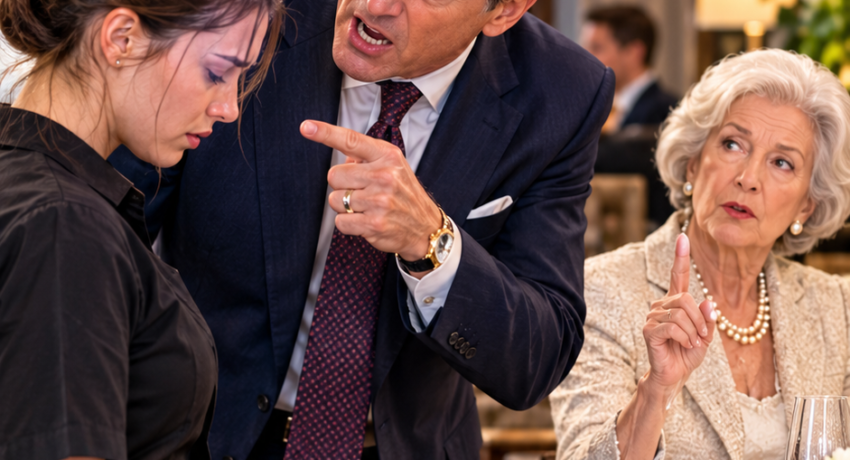
The man tapped the face of his expensive watch as though he were starting a countdown to something far more important than lunch.
“If the food takes longer than that, it comes out of your tip.”
I tightened my fingers around my order pad.
My name is Katrina, and at seven months pregnant, I had learned there were certain things worth arguing about—and certain things worth swallowing.
That afternoon, I needed every dollar more than I needed the satisfaction of telling a rude customer exactly what I thought of him.
So I forced a polite smile.
“What would you like, sir?”
He leaned back in the booth, glanced over our laminated menu, and said, “The most expensive thing you serve.”
We weren’t some elegant steakhouse.
We were a neighborhood diner with burgers, meatloaf, roast chicken, chicken-fried steak, and a ribeye that sat proudly at the top of the menu because it cost several dollars more than everything else.
“The ribeye is our most expensive entrée.”
He frowned.
“Is it good?”
“It’s one of our more popular dishes.”
“That isn’t what I asked.”
I hesitated.
“I’ve never had anyone send it back.”
He gave an exaggerated sigh.
Apparently, even that answer had disappointed him.
“Fine. Medium rare. Baked potato. No sour cream.”
Then he tapped his watch again.
“Ten minutes.”
“I’ll let the kitchen know.”
I turned away.
“And fresh coffee.”
I stopped.
The cup in front of him had been poured less than four minutes earlier.
“This one’s cold,” he said.
“Of course.”
“And replace the toast.”
He lifted a perfectly golden slice between two fingers as if he were holding something contaminated.
“It’s burned.”
It wasn’t.
But there are times when survival makes being right feel like a luxury.
“I’ll bring you another.”
“Light toast means light toast.”
“Yes, sir.”
As I turned toward the kitchen, I caught the eye of the woman sitting in the next booth.
Elizabeth.
She came into the diner two or three times a week.
Always alone.
Always carrying the same worn brown handbag.
Her silver hair curled softly around her ears, and a wooden cane usually rested within arm’s reach.
She never said much.
Coffee.
Eggs.
Sometimes pie.
But she watched people.
That afternoon, she looked at me with quiet sympathy.
A small look that said:
I saw that.
I gave her the faintest smile.
Then I kept moving.
I couldn’t afford to let one arrogant customer destroy my shift.
Actually, I couldn’t afford to lose much of anything anymore.
Part 2 — Forty-Three Dollars
My baby’s father had disappeared two days after our ultrasound.
He had stood in my kitchen staring at the grainy black-and-white image I’d stuck to the refrigerator with a magnet.
For several minutes, he said nothing.
Then he told me he needed some air.
By the following afternoon, most of his clothes were gone.
No dramatic fight.
No final speech.
Just absence.
It was strange how quietly someone could leave a life they had helped create.
So now there was only me.
Me, the baby growing beneath my uniform, and the forty-three dollars tucked inside an envelope in my purse that I had promised myself I wouldn’t touch unless absolutely necessary.
Rent was due in six days.
My next doctor’s appointment was the following week.
The nursery existed mostly in my imagination.
Every shift mattered.
Every table mattered.
Every tip mattered.
So when the rich man demanded his steak in ten minutes, I personally carried the order ticket to the kitchen.
“Priority?” the cook asked.
“Please.”
He glanced toward the dining room.
“Problem customer?”
“You have no idea.”
Eight minutes later, the ribeye was ready.
Perfectly cooked.
Baked potato beside it.
No sour cream.
Exactly what he had ordered.
I picked up the plate.
Then pain shot across the lower part of my belly.
I stopped so suddenly the plate nearly slipped from my hand.
My free palm hit the service counter.
For several seconds, I couldn’t straighten my back.
“Katrina?”
My manager, Diane, appeared immediately.
She had managed that diner long enough to recognize trouble before most people admitted they were in it.
“What happened?”
“Nothing.”
She stared at me.
“You just folded in half.”
“Pregnancy pain.”
“You need to sit.”
“It’ll pass.”
“Katrina.”
“I said I’m okay.”
I wasn’t sure whether I was convincing her or myself.
Another wave of discomfort tightened beneath my stomach.
I closed my eyes and breathed.
Slowly, the pain eased.
Diane reached for the plate.
“I’ll take it.”
“No.”
Her eyebrows rose.
“You can barely stand.”
“I can stand.”
“You don’t get a medal for suffering.”
“I need the table.”
She knew what I meant.
Tips.
Rent.
Bills.
The calculations that never left my head.
Diane sighed.
“One more pain like that and you’re sitting down whether you like it or not.”
“Deal.”
Three minutes later, I carried the steak toward the customer’s booth.
I had barely lowered it toward the table when his eyes dropped to his watch.
Then he looked at me.
“You’re late.”
Part 3 — One Minute
I thought he might be joking.
He wasn’t.
“I’m sorry?”
“Eleven minutes.”
His voice carried just enough for the surrounding tables to hear.
“I gave you ten.”
“I apologize, sir. I had a pain and needed to stop for a moment.”
His gaze moved toward my stomach.
For half a second, I expected concern.
Instead, irritation crossed his face.
“Pregnancy isn’t an excuse for incompetence.”
Something inside me tightened harder than the pain had.
He continued.
“Women make careless choices and then expect the rest of the world to adjust its standards around them.”
The conversations nearest us faded.
I could feel people listening.
Heat climbed into my face.
I wanted to tell him he knew nothing about me.
Nothing about the man who had disappeared.
Nothing about the money in my purse.
Nothing about working on swollen ankles because staying home didn’t pay rent.
Nothing about lying awake at two in the morning wondering whether I could build a life for a baby when I barely knew how I was going to pay next month’s electric bill.
Instead, I kept my voice even.
“Your meal took eleven minutes from the time I entered the order.”
“Exactly.”
He smiled.
“One minute late.”
There was something almost triumphant in the way he said it.
As though catching a pregnant waitress breaking an arbitrary deadline proved something important about the universe.
“I apologize for the delay.”
“Oh, spare me.”
He reached for his phone.
“I play golf with the owner.”
I stared at him.
“Okay.”
“One call and you won’t have to worry about being late again because you won’t have a job.”
Behind the register, I saw Diane straighten.
She had heard him.
I hoped she would stay where she was.
I could handle this.
At least, I needed to believe I could.
The man looked at my stomach again.
“You want some advice?”
“No, sir.”
“I’m going to give it to you anyway.”
Of course he was.
“If you can’t perform a job correctly, don’t expect everyone around you to lower their expectations because you’ve created personal problems for yourself.”
My throat tightened.
A chair scraped behind him.
I stared at the table.
Not because I was submissive.
Because I knew if I looked directly at him for too long, I might say something that would cost me more than his tip.
“Would you like anything else?”
His expression hardened.
Then he shoved the plate.
Not accidentally.
Not because he was moving something aside.
He pushed it with enough force that the ribeye slid across the table.
The plate tipped.
For one suspended second, I watched it fall.
Then it shattered beside my shoes.
Ceramic exploded across the floor.
Gravy splashed over my ankles.
Half the baked potato rolled beneath the booth.
The diner went silent.
Nobody moved.
The man glanced down at the mess.
Then he looked at me.
“Maybe next time you’ll remember the table.”
My hands began to shake.
Not from anger.
From humiliation.
There is something deeply degrading about being mistreated publicly while knowing you still need the person mistreating you to leave a tip.
I stared at the broken pieces near my shoes.
Then I heard the soft click of a spoon against a saucer.
Elizabeth folded her napkin.
Placed it neatly beside her cup.
Reached for her cane.
And stood.
Part 4 — “I Wondered If You’d Recognize Me”
Diane was already hurrying around the counter.
“You have got to be kidding me,” she muttered.
Elizabeth raised one hand.
It wasn’t dramatic.
She didn’t shout.
She didn’t slam anything.
She simply lifted her palm slightly.
For some reason, Diane stopped.
Elizabeth turned toward the man.
Then she said quietly,
“I wondered if you’d still recognize me, young man.”
He looked toward her.
And everything about him changed.
The color disappeared from his face.
His mouth opened.
No words came.
Elizabeth rested both hands on the top of her cane.
The man stared at her as though someone from another life had just stepped through a locked door.
“You?”
It was the first time I’d heard uncertainty in his voice.
Elizabeth tilted her head.
“I still know how to order breakfast.”
“How is this possible?”
He immediately seemed to realize how strange that sounded.
“I mean…”
His voice disappeared.
Elizabeth’s expression remained calm.
“You mean, what am I doing here?”
He swallowed.
She stepped slightly closer.
“You’ve always preferred questions when you already knew the answers.”
Less than two minutes earlier, this man had threatened my livelihood over sixty seconds.
Now he looked as though he wanted to disappear beneath the table.
“Elizabeth,” he whispered.
Her name sounded strange coming from his mouth.
Not Mrs. anything.
Not ma’am.
Elizabeth.
She gave him a small nod.
“So you remember.”
“Please…”
I almost couldn’t believe what I was hearing.
The man who had shown me no mercy was asking for some himself.
Diane crouched to collect the larger pieces of ceramic.
Automatically, I started to bend down.
“No.”
Elizabeth’s voice stopped me.
She looked directly at my stomach.
“Sit down, honey.”
“I’m okay.”
It came out automatically.
Elizabeth looked at the hand I had pressed beneath my belly.
Then at my face.
“You’re shaking.”
I looked down.
She was right.
Diane took the tray from me.
“Booth three. Sit.”
“Diane—”
“Now, Katrina.”
I sat.
The rich man looked toward me.
Something unfamiliar had appeared in his expression.
Embarrassment, perhaps.
Or fear.
Elizabeth turned back toward him.
“I’ve wanted to have this conversation with you for a long time.”
He stood abruptly.
His chair struck the booth behind him.
“Not here.”
Elizabeth’s eyebrow lifted.
“Why not?”
“Elizabeth.”
“You weren’t worried about behaving publicly five minutes ago.”
Several customers had openly turned to watch now.
The man noticed.
His jaw tightened.
“Please.”
Elizabeth studied him.
Then she opened her worn brown handbag.
His eyes dropped toward it.
And he actually stepped backward.
“Don’t.”
That single word silenced even my own thoughts.
Whatever Elizabeth was about to pull from that bag frightened him more than losing his meeting.
More than the staring customers.
More than the owner he supposedly played golf with.
She reached past tissues.
An old coin purse.
A pair of glasses.
Then she removed something small.
Red.
Plastic.
Scratched along one edge.
She placed it beside his expensive watch.
It was a diner name badge.
The lettering was faded.
But still readable.
ALAN
The rich man stared at it.
And suddenly he had a name.
Part 5 — Before the Watch
Elizabeth placed one hand beside the old badge.
“You left this with me a long time ago, Alan.”
His eyes didn’t move.
“I told you to throw it away.”
“I remember.”
“Then why didn’t you?”
Elizabeth glanced toward the shattered plate.
Then toward the gravy drying on my shoes.
“Because I remembered who you were when you wore it.”
Alan shut his eyes.
Just briefly.
When he opened them, he looked toward the door.
I thought he might leave.
Instead, he slowly sat.
I looked from his polished suit and expensive watch to the battered red name tag.
“You worked here?”
He didn’t answer.
Elizabeth did.
“Almost two years.”
I stared at her.
“I managed this diner back then.”
She looked at Alan.
“And I hired him.”
My anger shifted into disbelief.
This man had stood exactly where I stood.
Carrying plates.
Pouring coffee.
Listening to customers complain.
Depending on tips.
Elizabeth pointed with her cane toward a booth by the window.
“Do you remember Table Six?”
Alan’s shoulders stiffened.
“Elizabeth…”
“Do you?”
He stared toward the booth.
“Yes.”
“Good.”
She pulled out the chair opposite him and sat down.
“Tell her what happened there.”
He looked at me.
For the first time all afternoon, the man who always seemed to have something cutting to say had no words.
Elizabeth looked toward the empty booth.
“You were seventeen.”
Alan rubbed his thumb slowly over the edge of the badge.
“A woman came in with her little boy,” Elizabeth continued. “She counted coins before ordering him a hamburger.”
Alan lowered his eyes.
“She didn’t order anything for herself.”
I could already sense where the story was going.
Elizabeth continued.
“You brought her your employee sandwich.”
Alan’s thumb stopped moving.
“You told her the kitchen had accidentally made an extra.”
I looked at him.
“You did that?”
After several seconds, he gave the smallest nod.
Elizabeth leaned back.
“You recognized hunger because you’d seen your mother pretend she wasn’t hungry.”
Alan looked sharply at her.
“Enough.”
“No.”
Elizabeth’s voice stayed gentle.
“That is exactly what you’ve spent too many years telling yourself.”
She tapped the table beside the badge.
“You worked here because your mother needed help paying rent.”
Alan’s face hardened.
“You were ashamed that anyone knew.”
The diner remained completely quiet.
“One afternoon,” Elizabeth continued, “some boys from your school came in.”
Alan stared down at the table.
“They saw you wearing that uniform.”
His jaw tightened.
“They laughed.”
Elizabeth’s voice softened.
“After they left, you locked yourself in the stockroom.”
Alan’s hand curled.
“And you told me something.”
He shut his eyes.
I could see it now.
Not the rich businessman in front of me.
A humiliated seventeen-year-old boy trying to become something nobody could laugh at.
Elizabeth spoke slowly.
“You said, ‘Nobody is ever going to look down on me like that again.’”
Alan looked at the broken plate near my feet.
His voice came out low.
“I kept that promise.”
Elizabeth followed his gaze.
“Did you?”
Nobody breathed.
Not even me.
Part 6 — Who He Had Become
Alan stared at the floor.
Then, slowly, he looked toward me.
There were no clever insults left in his expression.
No superiority.
Just discomfort.
Maybe shame.
“I worked for everything I have,” he said.
It sounded like a defense.
Maybe something he had repeated to himself for thirty years.
I met his eyes.
“So did I.”
He blinked.
“I didn’t mean—”
“You knew nothing about me.”
“I know.”
“No.”
My voice trembled, but I didn’t look away.
“You know something now because Elizabeth embarrassed you.”
His face went pale again.
“You weren’t sorry when it was just me.”
Silence.
I pointed toward the shattered plate.
“You weren’t sorry when I was standing here alone.”
Alan reached inside his jacket.
I assumed he was getting his wallet.
“Put it away.”
His hand stopped.
“I want to make this right.”
“Then don’t buy your way out of it.”
His eyes lifted.
“Apologize.”
For several seconds, his hand remained inside his jacket.
Then he slowly pulled it out.
Empty.
“I’m sorry.”
I waited.
He knew immediately that wasn’t enough.
Alan glanced toward Elizabeth.
She said nothing.
Then he turned fully toward me.
“I humiliated you.”
His voice was quieter now.
“I threatened your job.”
He swallowed.
“And I made a cruel judgment about your pregnancy when I knew absolutely nothing about your life.”
His eyes dropped momentarily.
“I’m sorry.”
I studied him.
Part of me wanted to punish him with silence.
Another part wanted to list every fear I’d been carrying alone for months.
Instead, I gave him the only thing I was ready to give.
“Thank you.”
His phone buzzed.
Alan looked at the screen.
“My meeting.”
Elizabeth raised one eyebrow.
For half a second, he almost smiled.
Then he made a call.
“Push it back.”
He listened.
“No.”
He glanced toward me.
“The restaurant didn’t delay me. I’m running late.”
Something about that sentence landed harder than I expected.
Only minutes earlier, one minute had supposedly been worth humiliating me over.
Now the delay belonged to him.
He ended the call.
Then dialed another number.
“Tom? It’s Alan.”
My stomach tightened.
Tom was the owner.
Alan really did know him.
I braced myself.
Instead, Alan said,
“I need you to know something about your waitress Katrina.”
He looked toward me.
“She did nothing wrong today.”
I stared at him.
“I treated her badly. If you hear any complaint about what happened, the responsibility is mine.”
He listened.
“No. Don’t call her manager. She didn’t cause this.”
Another pause.
“I did.”
Then he hung up.
Diane appeared beside me.
“Wonderful.”
She folded her arms.
“Now that Mr. Ten-Minutes has officially cleared your reputation, you’re calling your doctor.”
I groaned.
“Diane…”
“You’re having pain at seven months.”
“I need to finish my shift.”
“You need to avoid delivering a baby beside the pie case.”
Elizabeth snorted.
Even Alan’s expression cracked slightly.
I finally took out my phone.
Part 7 — The Badge
While I waited for the nurse line to connect, Elizabeth picked up the old badge.
For a moment, she simply held it.
Thirty years.
She had carried that scratched piece of plastic through three decades.
Then she extended it toward Alan.
“Take it.”
He frowned.
“You kept this all these years.”
“Yes.”
“Why give it back now?”
“Because I’m finished keeping it for you.”
Something passed between them that none of us fully understood.
Alan reached out.
He held the badge carefully.
Not like trash.
Not like an embarrassing relic.
Like something heavier than it looked.
“You should have thrown this away.”
Elizabeth smiled sadly.
“No.”
She glanced toward me.
“Someone needed to remind you who wore it.”
Alan lowered his eyes.
For a moment, I wondered whether he would toss it into his briefcase.
Or hide it in his wallet.
Instead, he opened his suit jacket and slipped it into the inside pocket.
Close to his chest.
Then he stood.
Nobody tried to stop him.
Nobody applauded.
There was no dramatic transformation.
People don’t become completely different simply because someone reminds them of who they once were.
But sometimes a crack is enough to let something forgotten back in.
Alan headed toward the front door.
And that was when the teenage busboy came around the corner.
Part 8 — Broken Glass
His name was Tyler.
Sixteen years old.
First job.
Constantly terrified of making mistakes.
He was carrying a plastic tub full of drinking glasses.
His shoe caught the corner of a rubber mat.
I saw everything happen in slow motion.
The tub tilted.
Tyler grabbed for it.
Too late.
Glass crashed across the floor.
The sound startled half the diner.
Tyler froze.
His face went white.
And Alan was standing less than three feet away.
The entire room seemed to hold its breath.
Maybe everyone else was thinking what I was.
Which Alan is about to answer?
The man who had shoved a plate off my table because lunch took sixty extra seconds?
Or the seventeen-year-old boy who once used his employee meal to feed a hungry mother?
Tyler stared at the broken glass.
“I’m sorry, sir.”
Alan looked down.
Then at the teenager.
“You okay?”
Tyler blinked.
“Yes.”
“Didn’t cut yourself?”
“No.”
Alan nodded.
Diane was already reaching for a broom.
“Don’t touch anything with your hands,” Alan told Tyler. “Let her sweep it.”
The boy nodded quickly.
Alan stepped around the glass.
Then he paused.
His hand moved almost unconsciously toward the inside pocket where he’d placed the badge.
For a second, I thought he might turn around.
Say something to Elizabeth.
Or me.
He didn’t.
He simply walked out.
The door closed behind him.
Nobody clapped.
That was probably better.
He hadn’t earned a celebration.
He had simply remembered how not to make someone smaller.
Sometimes that is where change begins.

Part 9 — What Elizabeth Remembered
Elizabeth returned to her booth.
She sat down and lifted her coffee as calmly as if she had merely corrected someone’s table manners.
I was still waiting on hold with the nurse.
I looked at her.
“You really kept that badge for thirty years?”
She took a sip.
“Apparently.”
“Why?”
She stared into her coffee for a moment.
“When Alan first started working here, he was angry at the world.”
I almost laughed.
“Some things don’t change.”
Elizabeth smiled faintly.
“He wasn’t cruel then.”
She looked toward the door Alan had just walked through.
“Embarrassed, mostly.”
“About being poor?”
“About being seen as poor.”
There was a difference.
Elizabeth understood it.
“He was smart,” she continued. “Ambitious. Always saying he was going to make enough money that nobody would ever pity his mother again.”
“That doesn’t sound bad.”
“It wasn’t.”
She folded her hands.
“Wanting a different life isn’t wrong, Katrina.”
Her eyes met mine.
“The trouble starts when you’re so afraid of becoming the person people looked down on that you begin looking down on everyone who reminds you of them.”
I looked toward the broken glass being swept away.
Then toward the remaining gravy stain near my shoe.
“He forgot.”
Elizabeth shook her head.
“I don’t think people always forget.”
“What do they do?”
“Sometimes they bury things.”
She tapped her chest lightly.
“Deep enough that they can pretend those things belong to somebody else.”
The nurse finally came on the line.
I explained the pain.
My pregnancy.
How long it had lasted.
She asked several questions and advised me to stop working, rest, drink water, and contact my doctor immediately if the pain returned or changed.
Diane listened to every word.
When I hung up, she pointed toward the break room.
“Home.”
“Diane…”
“Not negotiable.”
“My shift—”
“Covered.”
“I need the money.”
“I know.”
Those two words broke through me more than Alan’s insults had.
Because Diane really did know.
Maybe not every detail.
But enough.
My eyes suddenly burned.
I looked away.
Elizabeth reached across the aisle and touched the edge of my table.
“Go take care of yourself, honey.”
I nodded.
For once, I didn’t argue.
Part 10 — One Minute
Before leaving, I changed out of my gravy-stained shoes and cleaned myself up as much as I could.
The shattered plate was gone.
The glass was gone.
Alan’s booth had been wiped down.
Someone new would sit there within the hour and never know what had happened.
That is the strange thing about public humiliation.
To everyone watching, it becomes a story.
To the person living through it, the moment can cling for years.
I paused beside Elizabeth’s table.
“Thank you.”
She looked up.
“For what?”
“For standing up.”
Elizabeth shrugged.
“You looked like you needed someone standing.”
I smiled.
Then I thought about Alan at seventeen.
A boy in a cheap diner uniform.
A mother struggling to pay rent.
Classmates laughing.
The vow he had made in a stockroom.
Nobody is ever going to look down on me again.
Somewhere along the way, Alan had confused dignity with superiority.
He had become so determined never to feel small again that he had learned to make other people feel small first.
The expensive watch hadn’t done that.
The money hadn’t.
Success hadn’t.
Fear had.
I looked toward the door.
“Do you think he’ll really change?”
Elizabeth considered the question.
“I don’t know.”
That answer surprised me.
“You don’t?”
“People like simple endings.”
She lifted her coffee.
“Real people aren’t simple.”
I thought about Alan asking Tyler whether he was hurt.
It wasn’t enough to erase what he’d done to me.
But it was something.
Elizabeth continued.
“The badge didn’t make him a good person thirty years ago. The watch doesn’t make him a bad one now.”
She paused.
“What matters is what he does when nobody is forcing him to remember.”
I carried those words with me.
Outside, the afternoon sun hit my face.
I placed one hand over my belly.
The baby moved.
Just a small shift beneath my palm.
I stood there for a moment, breathing.
Rent was still due.
The forty-three dollars was still in my purse.
My baby’s father was still gone.
One apology wasn’t going to solve my life.
Elizabeth hadn’t rescued me from reality.
Alan hadn’t magically become someone I trusted.
But something had changed.
For months, I had begun seeing myself through the eyes of every person who judged me.
Single.
Pregnant.
Struggling.
Waitress.
Abandoned.
Behind.
I had spent so much energy trying not to look weak that I had forgotten weakness and hardship were not the same thing.
Alan had spent thirty years running from the boy who wore that red badge.
I didn’t want to spend my life running from the woman I was now.
I was working.
Trying.
Scared sometimes.
Exhausted often.
But still standing.
My phone buzzed with a text from Diane.
Go home. That’s an order.
Another message appeared beneath it.
And don’t worry about today. I’ve got you.
I laughed quietly.
Then I walked toward my car.
That morning, I had believed being one minute late had cost me a tip, my dignity, and perhaps even my job.
By the end of the afternoon, I understood something different.
Dignity wasn’t something Alan could take by pushing a plate onto the floor.
It wasn’t something a customer could measure with a watch.
And it wasn’t something I had to earn by suffering silently.
Sometimes dignity is simply remembering who you are after somebody else tries very hard to make you forget.
Alan needed an old red badge to remind him.
I only needed to finally listen when someone told me to sit down, take care of myself, and stop proving I could carry everything alone.
So for once—
I listened.