Part 1 — The Birthday Gift No One Expected
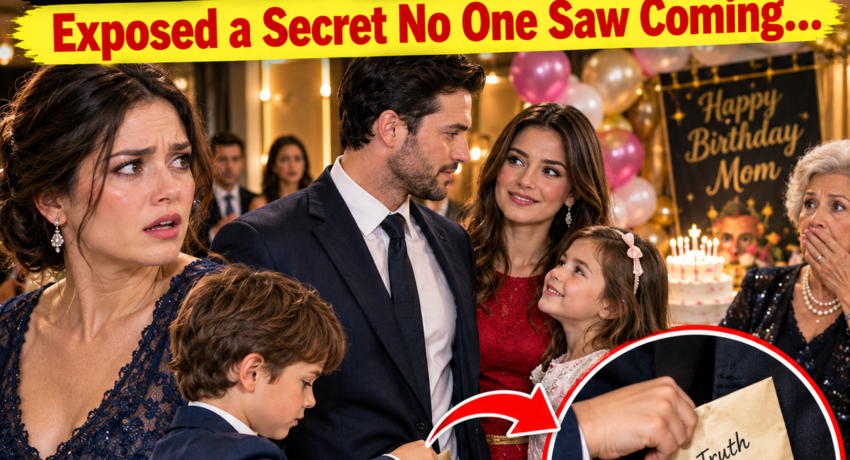
“Today, our marriage ends. And I want everyone here to see it.”
Those were the words my husband, Joe Vance, chose to say in front of more than a hundred guests at his mother’s seventy-fifth birthday celebration.
Not privately.
Not in our kitchen after our son had gone to sleep.
Not in a lawyer’s office where two adults could admit their marriage was over with at least a little dignity.
He chose a ballroom at an exclusive country club in Greenwich, Connecticut, surrounded by relatives, business associates, family friends, and people who had known us for years.
And he had planned every second of it.
I was standing near my mother-in-law, Eleanor, when it happened.
Only minutes earlier, I had been helping her pull a soft cardigan over her shoulders because she complained the ballroom was too cold. Crystal glasses glittered beneath the chandeliers while servers moved through the room carrying champagne.
Everything looked elegant.
Perfect, even.
But I already knew my marriage was anything but perfect.
Joe had disappeared nearly an hour earlier.
I knew where he had gone.
Or, more accurately, I knew who he had gone to meet.
Three days before the party, I had been searching through the desk in his home office when I found a phone shoved behind a stack of old financial reports.
It wasn’t his regular phone.
It was a cheap burner phone.
I almost put it back.
Almost.
But something inside me told me to turn it on.
What I found changed ten years of marriage in less than ten minutes.
Photographs.
Messages.
Hotel reservations.
Bank transfers.
And then a video.
A little boy, perhaps three years old, was running across a living room toward the camera.
Toward Joe.
“Daddy!”
I watched the clip twice because the first time my mind refused to understand what my eyes were seeing.
Joe bent down in the video and lifted the child into his arms with an ease that told me this wasn’t some recent introduction.
The boy knew him.
Loved him.
Trusted him.
And Joe smiled at him like a father.
I sat alone in his office, holding that phone while everything I believed about my marriage quietly collapsed.
But I didn’t confront him.
Not yet.
I needed to speak with an attorney first.
More importantly, I needed to protect our ten-year-old son, Tommy.
Tommy had spent much of his childhood dealing with serious respiratory problems. While other boys attended baseball camps or spent summer afternoons racing bicycles around the neighborhood, Tommy knew the fluorescent lights of specialty clinics and the sound of breathing treatments.
He was bright, funny, thoughtful, and stronger than most adults I knew.
Joe rarely saw it that way.
Neither did Eleanor.
She liked to talk about the Vance family producing “strong men.”
Whenever Tommy became sick, whenever he couldn’t participate in something physical, I could see the disappointment she tried unsuccessfully to hide.
I hated it.
But for years I swallowed my anger for the sake of peace.
That night, peace finally became impossible.
The ballroom doors opened.
Every conversation seemed to stop at once.
Joe walked inside.
Beside him was a young woman wearing a striking red dress.
I recognized her immediately from the secret phone.
Tracy.
And holding their hands between them was the little boy from the video.
My heart pounded, but I didn’t move.
Joe looked around the ballroom like a man arriving to receive an award.
Then he smiled at his mother.
“Mom, I brought you something you’ve wanted for a long time.”
He rested his hand proudly on the little boy’s shoulder.
“This is Leo.”
A pause.
“My son.”
Someone dropped a fork.
Eleanor stared at the child.
For one foolish second, I expected outrage.
I expected her to turn on Joe and demand to know how he could humiliate his wife and son in front of the entire family.
After all, I had been part of her life for ten years.
I had driven her to medical appointments.
I had sat beside her during hospital stays.
I had arranged holiday gatherings, charity dinners, and business events.
I had quietly repaired arguments before they became scandals.
I had listened to her criticize me, my parenting, and sometimes even Tommy.
Still, I had always shown up when she needed me.
Eleanor didn’t look at me.
Instead, her face softened.
She opened her arms.
“My grandson.”
Then, with tears shining in her eyes, she whispered, “My precious boy.”
Something inside me went completely still.
Because I realized then that the affair wasn’t the deepest betrayal in that ballroom.
It was watching a grandmother welcome one grandson as though the grandson she already had had never been enough.
Tommy was sitting several tables away.
I looked at him.
His face told me he had understood everything.
Joe finally turned toward me.
There wasn’t even shame in his expression.
Only confidence.
“Tracy and I are going to be together,” he announced.
The ballroom had become so quiet that every word carried.
“You weren’t able to give me another child. My mother deserves a proper grandson who can continue the family name.”
I felt my hands curl into fists.
Joe continued.
“There’s no reason for this to become ugly. Sign the divorce papers. Pack your things. Don’t fight me over the house or the company shares.”
There it was.
The real purpose of the evening.
He wasn’t simply leaving me.
He was staging my removal.
And he expected an audience to make me surrender.
Whispers started around the ballroom.
An aunt murmured something about Joe needing an heir.
One of his cousins said quietly that perhaps I should accept the situation “with dignity.”
Dignity.
Apparently, dignity meant allowing my husband to bring his mistress and secret child to a family celebration while I stood quietly and surrendered my home, marriage, and financial rights.
I stepped forward.
Before I could say a word, a chair scraped against the floor.
Tommy stood.
“Tommy?”
He didn’t look at me.
He walked directly toward the stage.
My son was small for his age then, but I had never seen him walk with more determination.
He climbed the steps, took the microphone from its stand, and turned toward Tracy.
“I want to thank you,” he said.
Everyone stared.
Tommy continued.
“For taking Dad off our hands.”
A few shocked laughs escaped from somewhere near the back of the ballroom.
“As of tonight,” Tommy added, “he’s your problem.”
“Tommy!” Joe barked.
But Tommy wasn’t finished.
He reached into the inside pocket of his blazer.
And pulled out a black USB drive.
My stomach dropped.
“And Mom isn’t leaving here with nothing,” he said.
His voice trembled, but he kept going.
“Because I copied everything from Dad’s secret phone.”
For the first time that evening, Joe Vance looked afraid.
Then Tommy turned toward me.
“There are things on here you don’t know about either, Mom.”
And suddenly I realized the evening Joe had designed to destroy me might become the beginning of his own downfall.
Part 2 — The USB Drive
Joe charged toward the stage.
I moved before I even had time to think.
I stepped directly between him and Tommy.
“Give me that drive!” Joe snapped.
Then he looked at me.
“Control your son.”
I almost laughed.
“When Tommy earns academic awards, he’s your son,” I said. “But when he embarrasses you, suddenly he’s mine?”
Joe glared at me.
“I am not silencing him just to protect you.”
Behind me, Tommy was shaking.
He was only ten.
That was the detail everyone seemed to forget.
He wasn’t some clever adult enjoying his father’s humiliation.
He was a frightened child watching his family explode.
But he believed he had to save me.
That realization hurt more than Joe’s affair.
Tommy raised the microphone again.
“Dad said Mom isn’t entitled to anything.”
The room quieted.
“But Grandpa left company shares to Mom.”
Joe’s face tightened.
“And there are emails showing Dad trying to get her to sign them back.”
The whispers became louder.
My late father-in-law had left me a minority stake in Vance Global four years earlier.
It wasn’t charity.
For years I had worked behind the scenes handling corporate partnerships, public relations crises, charity events, investor gatherings, and countless problems Joe liked pretending somehow solved themselves.
My father-in-law had noticed.
Before he died, he made certain part of the company belonged to me independently.
Joe had never forgiven him for it.
“Turn off the microphone!” Joe shouted toward the audio booth.
The technician reached toward the controls.
Then a voice came from the ballroom entrance.
“Leave it on.”
I turned.
My father stood there leaning on his cane.
My mother was beside him.
They had driven in from out of state and had arrived later than expected.
Dad looked directly at Joe.
“Let the boy finish.”
Joe went pale.
Tommy looked toward me.
His brave expression finally cracked.
“Mom,” he whispered into the microphone, “you’re always standing alone.”
That sentence broke through every wall I had built around myself.
I walked onto the stage and gently took the microphone from his hand.
“Not tonight, sweetheart.”
I squeezed his shoulder.
“Tonight I’m standing.”
Then I faced Joe.
“You want a divorce?”
He stared at me.
“You’re getting one.”
A murmur traveled through the room.
“But I am not walking away from my home. I am not surrendering my shares. And I will not allow you to turn Tommy into collateral damage in whatever game you’re playing.”
Tracy suddenly stepped forward.
Her confidence had vanished.
“Joe told me you two had been separated for years.”
I looked at her.
“Separated?”
She nodded nervously.
I gestured around the ballroom.
“Then why did you come to his mother’s birthday party to watch him publicly throw me out?”
She opened her mouth.
Nothing came out.
Eleanor stepped toward Tracy.
“Please. Don’t destroy this family because of one mistake.”
I turned toward her.
“One mistake?”
My voice was quiet.
“Leo is three years old.”
Eleanor stopped.
“This wasn’t one mistake. It was years of choices.”
She had no answer.
Joe leaned closer to me.
His voice dropped.
“You are going to regret this.”
I looked at the microphone still in my hand.
Then back at him.
“Joe, the microphone is still on.”
Laughter broke out around the ballroom.
Not warm laughter.
Sharp, uncomfortable laughter.
Joe stepped backward, his face burning red.
I handed the microphone to the stunned event coordinator.
Then I took Tommy’s hand.
My parents walked beside us as we left.
Nobody tried to stop us.
The moment the car door closed, Tommy fell apart.
His entire body began trembling.
“I didn’t want them to make you leave,” he sobbed.
I pulled him into my arms.
Then came the words I will remember for the rest of my life.
“Grandma keeps saying I’m not enough for the Vance family.”
I held him tighter.
A few seconds later, he looked up at me.
His cheeks were wet.
“Did Dad go find another kid because something is wrong with me?”
I felt something inside my chest break.
“No.”
I held his face between my hands.
“Listen to me very carefully.”
He looked into my eyes.
“There is nothing wrong with you.”
“But—”
“No.”
I made sure he heard every word.
“Children do not cause the emptiness inside adults. Your father made choices because of who he is, not because of anything you lack.”
Tommy started crying again.
“You never have to earn your right to be loved,” I told him.
“Not from your father. Not from your grandmother. Not from anyone.”
That night I thought the worst secret had already been revealed.
I was wrong.
Part 3 — The Real Trap
The next morning, two attorneys sat with me at my parents’ dining table while we went through the files Tommy had copied.
Every folder seemed to contain another betrayal.
Messages between Joe and Tracy.
Transfers of money.
Financial arrangements he had hidden from me.
Corporate transactions that needed closer examination.
Evidence that he had been preparing for divorce long before I knew anything was wrong.
Then one of the attorneys opened an audio file.
“Bella,” she said carefully, “you need to hear this.”
Eleanor’s voice filled the room.
“If she won’t transfer the shares willingly, use the boy.”
My hands went cold.
My mother’s expression changed instantly.
The recording continued.
Eleanor said a public confrontation would make me look emotional and irrational.
If I lost my temper in front of relatives and business associates, they could later use the incident to question my judgment.
Perhaps even my board votes.
Perhaps my parenting.
Then Joe spoke.
“We make her look unstable. If she causes a scene, it’ll be easier to pressure her on custody too.”
I stopped breathing for a moment.
The affair was suddenly almost secondary.
Joe hadn’t merely fallen in love with someone else.
He hadn’t simply decided he wanted another life.
He and Eleanor had deliberately planned to humiliate me.
They wanted me angry.
They wanted me crying.
They wanted witnesses.
The birthday party hadn’t been chosen randomly.
It was a stage.
And I had been expected to perform exactly the role they had written for me.
My mother slowly set down her teacup.
“So that’s why they did it in front of everyone.”
The attorney nodded.
She was careful not to promise an easy victory.
High-asset divorces were complicated.
Financial records would be examined.
Custody would depend on Tommy’s best interests.
The company shares would undoubtedly be challenged.
Nothing would be resolved overnight.
But something inside me had already changed.
For ten years I had constantly wondered whether I was overreacting.
Whether Eleanor really meant those comments.
Whether Joe truly dismissed me or whether I was simply sensitive.
The recording ended that uncertainty.
I finally understood who I was dealing with.
Joe called me twenty times that day.
I didn’t answer.
Then the messages started.
This has gone too far.
Mom’s blood pressure is dangerously high.
Tracy is hysterical.
Tommy had no right to steal private information.
We can fix this without lawyers.
The final message said:
If you keep doing this, you’re going to destroy the family.
My mother read it over my shoulder.
She gave a humorless laugh.
“Interesting how the family only becomes ‘destroyed’ when the woman stops cleaning up everyone else’s mess.”
Three days later, Joe arrived at my parents’ house.
My father met him at the gate.
“I want to see my son.”
“Tommy doesn’t want to see you.”
“He’s ten,” Joe snapped. “He doesn’t know what he wants.”
Dad stared at him.
“After what happened at your mother’s party, he seems to understand more than most of the adults involved.”
I stepped onto the porch.
Joe immediately turned toward me.
“You left me no choice.”
I walked toward him.
“What choice did I take away from you?”
He said nothing.
“You could have asked me for a divorce. You could have told me about Tracy. You could have acknowledged Leo privately. You could have protected Tommy from any of it.”
I stopped a few feet from him.
“But you chose to bring a three-year-old child into a ballroom like a trophy because you believed humiliating me would make me surrender my shares.”
Joe pointed toward his car.
“Tracy isn’t responsible for this.”
I studied his face.
Then I realized something.
“She is the first person you’ve defended all week.”
He stared at me.
For once, Joe Vance had absolutely nothing to say.
I told him that all future communication regarding Tommy would go through our attorneys.
Tommy would also begin seeing a therapist before any visitation arrangements were discussed.
Joe drove away.
There was no audience now.
No relatives whispering about heirs.
No mother applauding his decisions.
Only a man getting into his car after realizing the wife he expected to frighten had stopped being afraid.
Part 4 — What Our Son Was Carrying
The following months were some of the hardest of my life.
Joe’s attorneys attacked from every direction.
They claimed I had exaggerated my role in Vance Global.
They suggested my company shares should have remained within the Vance family.
They described me as emotional, bitter, vindictive.
One filing even implied that I had never held a “real corporate position.”
That one hurt more than I expected.
For ten years I had performed work people barely noticed because I performed it well.
I handled investor functions.
I smoothed over corporate crises.
I coordinated charitable events.
I protected Joe from embarrassing mistakes.
I cared for Eleanor after two surgeries.
I managed our household.
And I raised Tommy through years of medical appointments.
Somehow, because much of that work happened quietly, they decided it hadn’t counted.
Mom reminded me of something I never forgot.
“In court, you prove what you can document. But in the life you’re building afterward, you decide what you’re never giving away again.”
While lawyers fought over money and ownership, Tommy began seeing a child psychologist named Dr. Sarah Miller.
At first, he hardly spoke during the sessions.
Then one afternoon he drew a picture.
A house.
It had two separate front doors.
I stood outside one.
Joe stood outside the other.
And Tommy had drawn himself alone in the middle.
I stared at that picture longer than I should have.
I had been thinking about property.
Shares.
Custody schedules.
Legal strategy.
My son was thinking about being torn into two pieces.
That night I sat beside him on his bed.
“Tommy, I need you to understand something.”
He looked up from his book.
“You don’t have to hate your father just because you love me.”
His face tightened.
“Well, right now I hate him.”
“Then you’re allowed to feel that.”
He looked away.
“What happens if someday I don’t?”
“That’s allowed too.”
He looked back at me.
“You won’t be angry?”
“No.”
I took his hand.
“What your father did to me as a husband doesn’t determine how you’re required to feel about him as your dad.”
I swallowed.
“I will never make your pain into a weapon.”
For a while he said nothing.
Then he told me he still remembered the afternoon Joe had taught him to ride a bicycle.
He had been six.
Joe ran alongside him for nearly half an hour before finally letting go of the seat.
Tommy smiled faintly at the memory.
Then his expression became confused.
“How can someone do nice things and also do something really awful?”
It was a difficult question because adulthood doesn’t always provide satisfying answers.
“Because people aren’t only one thing,” I told him.
“Sometimes someone can love you and still hurt you. Sometimes people can do good things and still make terrible choices.”
“That’s confusing.”
“I know.”
“Wouldn’t it be easier if Dad were just bad?”
“Yes,” I admitted. “It probably would.”
Months later, Tommy agreed to participate in court-monitored visits with Joe.
Joe arrived for the first meeting carrying expensive gaming equipment.
Tommy didn’t even open the boxes.
“Hey, sport,” Joe said.
Tommy stared at him.
“Do you actually want to know how I’m doing?”
Joe blinked.
“Of course.”
“Or do you want me to say I’m doing great so you can tell your lawyer?”
Behind the observation window, my chest tightened.
The counselor gently encouraged Joe not to defend himself.
Tommy asked the question he’d clearly been carrying for months.
“Why did you bring Leo to Grandma’s party?”
Joe hesitated.
“I wanted everyone to meet your brother.”
Tommy shook his head.
“No.”
Joe frowned.
“No?”
“You wanted everyone to see that he was the better grandson.”
Joe immediately denied it.
But Tommy kept going.
“Grandma looked at Leo like she’d finally gotten the grandson she wanted.”
Joe lowered his eyes.
“I don’t hate Leo,” Tommy continued. “He didn’t do anything wrong.”
That sentence made me incredibly proud.
“But you did,” Tommy said. “If you cared about me, you wouldn’t have used me to hurt Mom.”
Joe sat silently for several seconds.
Then he whispered, “I’m sorry.”
Tommy’s expression didn’t soften.
“Are you sorry because you did it?”
Joe looked up.
“Or because everybody saw?”
Joe didn’t answer.
Tommy asked to end the session early.
During the drive home, he stared out the window.
“I’m not ready to forgive him.”
“You don’t have to be.”
I waited.
Then added, “Just don’t let what happened turn you cruel.”
Tommy nodded.
And that became our rule.
We didn’t have to pretend something didn’t hurt.
We only had to make sure the hurt didn’t decide who we became.
Part 5 — The Divorce
The divorce took almost a year.
There was nothing glamorous about it.
No single dramatic courtroom speech.
No moment where a judge slammed a gavel and declared one side morally victorious.
There were depositions.
Audits.
Financial documents.
Meetings.
Arguments between lawyers.
Negotiations that lasted hours.
Eventually, I kept the company shares my father-in-law had left me, along with my independent assets.
I received primary physical custody of Tommy.
Joe was granted structured visitation combined with family counseling.
I didn’t feel victorious.
I felt exhausted.
But for the first time in years, I also felt like I could breathe.
On the day the divorce became final, Joe stopped me in the courthouse hallway.
He looked different.
Thinner.
Older.
The confidence he had carried into Eleanor’s ballroom had disappeared.
“Tracy left me,” he said.
I waited.
“She took Leo back to her hometown.”
I still said nothing.
“She said she doesn’t want my mother turning him into some kind of heir. She said she finally understood that she’d never really be equal in our family.”
For one surprising moment, I felt sorry for Tracy.
Not because I had forgotten what she had done.
Not because I excused her role in the affair.
But because she had finally recognized the same cage I had spent ten years trying to survive.
“I hope Leo is okay,” I said.
Joe frowned.
“That’s all you’re going to say?”
“What were you expecting?”
“I don’t know. Maybe that I got what I deserved.”
I looked at him.
“You did get what you deserved.”
His face tightened.
“I simply don’t need to celebrate it.”
He studied me.
“You used to be kinder.”
I almost smiled.
“No, Joe.”
I shook my head.
“I used to remain quiet when I should have spoken.”
He looked toward the courthouse doors.
“I miss Tommy.”
That hurt because I believed him.
“Then become someone he can trust again.”
Joe swallowed.
“Will you ever forgive me, Bella?”
For an instant, I was back in that ballroom.
Tracy’s red dress.
Eleanor opening her arms to Leo.
Relatives staring.
My son gripping a microphone when he should have been eating birthday cake and laughing with his cousins.
“Maybe one day remembering it won’t hurt anymore,” I said.
Joe looked hopeful.
I finished my sentence.
“But don’t confuse healing with forgiveness.”
Then I walked away.
Part 6 — Learning What Healing Really Means
Two years passed.
Our life looked almost nothing like the one we’d had before.
Tommy grew taller.
His respiratory health improved significantly.
He became interested in music and started playing piano.
He still visited Joe.
Some visits went surprisingly well.
Others ended with Tommy climbing into my car and saying very little during the drive home.
I stopped asking too many questions.
I learned to let him decide when he wanted to talk.
One afternoon he returned from dinner with Joe and placed his jacket over a chair.
“Dad apologized today.”
I looked up.
“He’s apologized before.”
“This time was different.”
“How?”
Tommy thought about it.
“He didn’t explain afterward why it wasn’t really his fault.”
I smiled.
“That matters.”
“I still don’t know whether I forgive him.”
“You don’t need to decide yet.”
Eleanor tried to reconnect too.
At first she sent expensive gifts.
Tommy refused them.
Then she started sending letters.
For a long time, he left them unopened.
When he was thirteen, he finally opened one.
In it, Eleanor admitted that she had failed him as a grandmother.
She wrote that she had confused physical health with strength and inheritance with worth.
She admitted that she had treated Tommy as though he were somehow less valuable.
You were never less, she wrote.
I was too blind to understand that.
Tommy handed me the letter.
“Do you believe her?”
“I don’t know.”
He looked disappointed by my answer.
So I explained.
“People can change. Sometimes they really do.”
I folded the letter.
“But someone’s change doesn’t create an obligation for you.”
“What does that mean?”
“It means you can forgive someone and still keep boundaries. You can accept an apology without giving that person the same access to your life they had before.”
About a year later, Tommy decided to meet Eleanor at a park.
She arrived using a walker.
When she saw him, she cried.
But she didn’t demand a hug.
That mattered.
They sat opposite each other on a bench.
Tommy spoke first.
“If we’re going to have any kind of relationship, you can never tell me again that someone is better because they’re healthier, richer, or have the right family name.”
Eleanor wiped her eyes.
“Never again.”
They talked for about twenty minutes.
When Tommy got back into my car, he stared through the windshield for a moment.
“I still don’t know if I want to see her all the time.”
“You don’t have to decide today.”
He nodded.
“But I’m glad I told her.”
That was when I understood something I hadn’t understood during my marriage.
Boundaries aren’t always punishment.
Sometimes boundaries are how healing becomes possible.
Epilogue — The Life We Built Afterward
I rebuilt too.
I kept my seat on the Vance Global board.
For years, I had helped protect a company that carried someone else’s family name.
Eventually, I decided to use my position for something that actually mattered to me.
I helped establish a corporate foundation supporting pediatric respiratory health research.
Every time I spoke about the foundation, I thought about the years Tommy and I had spent beneath fluorescent hospital lights.
I remembered sitting beside his bed and pretending not to be afraid.
I remembered other parents doing exactly the same thing.
At the first major gala I hosted independently, Tommy sat in the front row.
Afterward, he found me near the stage.
“You looked like yourself tonight, Mom.”
I laughed.
“What did I look like before?”
He considered the question.
“Like someone who was always trying really hard not to inconvenience anybody.”
I laughed again.
Then unexpectedly, tears filled my eyes.
Children notice far more than adults realize.
Years passed.
When Tommy turned eighteen, he asked for a small birthday dinner at home.
No ballroom.
No hundred-person guest list.
No microphones.
No speeches.
He invited Joe himself.
Joe arrived alone.
His gift was an antique astronomy book Tommy had been searching for.
Years earlier, Joe would have turned the evening into a performance.
This time he didn’t make a toast about the Vance family.
He didn’t demand attention.
He didn’t try to claim the best seat at the table.
He simply sat with us.
He listened.
He asked Tommy about school.
And he enjoyed dinner.
It wasn’t redemption.
But it was progress.
Eleanor sent a birthday card along with money for Tommy’s college tuition.
Tommy kept the card.
He donated the money to the pediatric foundation.
“I don’t want money buying something we’re still trying to repair,” he explained.
I understood.
Eventually, Tommy chose to study child psychology.
“Because of what happened to us?” I asked.
“Partly.”
He smiled.
“But I don’t want to spend my entire life talking about trauma.”
“What do you want to do?”
“I want to help people stop passing it on.”
Years later, I sat in an auditorium watching him graduate from college.
Joe sat in the same row.
Two empty seats separated us.
Eleanor attended in a wheelchair.
When Tommy walked across the stage, tall and confident beneath his graduation gown, I suddenly saw the little boy from that birthday party.
Ten years old.
Terrified.
Holding a USB drive in one hand and a microphone in the other because he believed his mother needed rescuing.
After the ceremony, Tommy took photographs with everyone.
One with me.
One with Joe.
One with his grandparents.
Then he looked between Joe and me.
“I want one with both my parents.”
Joe and I exchanged a glance.
Neither of us argued.
We stood on either side of our son.
The photographer raised the camera.
“Smile.”
And we did.
Not because we were pretending to be a happy family again.
We weren’t.
Too much had happened.
Too much had broken.
But we were three people who had survived something painful without needing to rewrite history.
Afterward, Tommy hugged me.
“I wanted that picture.”
“Why?”
“Because I don’t want to spend my life choosing between fake versions of what happened.”
I held him tighter.
“I’m proud of you.”
He smiled.
“I’m proud of you too, Mom.”
Those words meant more to me than he probably knew.
My life continued.
Not as Mrs. Joe Vance.
Not as Eleanor’s dutiful daughter-in-law.
Not as the woman constantly trying to keep a powerful family comfortable.
Simply as Bella.
I had work I believed in.
Friends who knew the real me.
Quiet mornings.
Travel.
A peaceful home.
Most importantly, I lived in a place where nobody had to carefully measure every sentence just to prevent someone else’s anger.
People who attended Eleanor’s birthday party remembered the spectacle for years.
They remembered Joe entering with Tracy.
They remembered little Leo.
They remembered Tommy taking the microphone.
They remembered the USB drive.
What people rarely understand is what comes after the dramatic moment.
After the confrontation ends, you still have to wake up the next morning.
You still have to raise your child.
You still have to sit in lawyers’ offices.
You still have to rebuild your confidence.
You still have to learn who you are when the person you spent years protecting is no longer standing beside you.
Sometimes I think about that night.
And if I could return to that ballroom for just thirty seconds, I know exactly what I would do differently.
I would reach Tommy before he reached the microphone.
I would put my hand on his shoulder and say:
“Sit down, sweetheart.”
Then I would look at Joe myself.
“I’ve got this.”
Because Tommy should never have believed it was his responsibility to save me.
I can’t change what happened.
But I changed everything that came afterward.
I stopped believing silence was the same thing as keeping peace.
I stopped confusing endurance with dignity.
I stopped making myself smaller so other people could feel bigger.
And I built a life in which my son would never again have to stand between me and someone trying to hurt me.
Joe lost his marriage.
He lost the image he had carefully built.
And for years, he lost the easy trust of his son.
I lost ten years of believing in something that wasn’t real.
I lost a marriage.
I lost an extended family that had never truly valued me the way I had valued them.
But I regained something much more important.
My voice.
For years, I believed families were held together by the person willing to absorb the most pain.
I know better now.
A family isn’t always destroyed when a woman finally says, “Enough.”
Sometimes what looks like the end of a family is simply the end of pretending.
And sometimes, when one person finally refuses to keep carrying everyone else’s damage, something healthier finally has room to begin.