
PART ONE
I had imagined the moment a hundred times on the flight home.
I would open the apartment door quietly.
Wendy would look up in surprise.
I would finally hold our newborn son for the first time.
Maybe she would cry. Maybe I would.
Instead, when I stepped inside three weeks earlier than planned, the first thing I noticed was the cold.
Not ordinary winter cold.
The apartment felt abandoned.
My breath nearly fogged in front of me. The radiators were silent. A thin layer of frost had gathered along the lower corners of the windows.
Then I heard my wife say my name.
“Luca?”
Her voice was so faint that for a second I thought I had imagined it.
I dropped my suitcase.
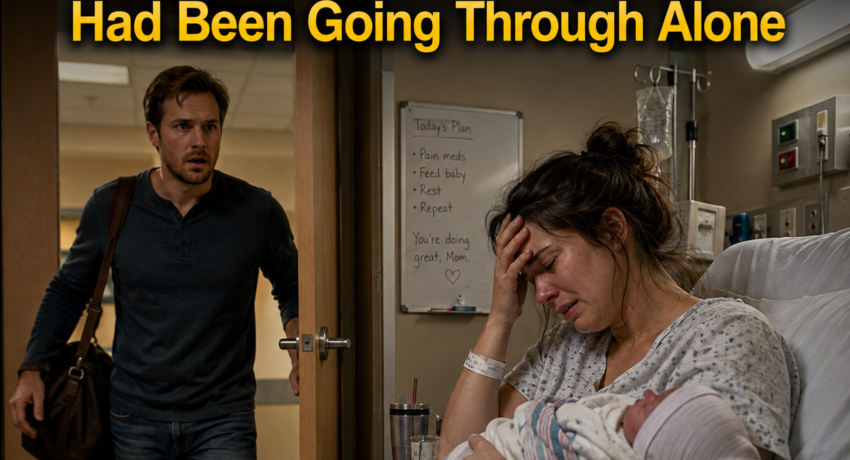
Wendy was curled up on the couch beneath two blankets, our newborn son pressed against her chest beneath her sweater. She looked exhausted—far thinner than when I had left, her face pale and her lips dry.
A half-empty bottle of water sat on the coffee table.
Beside it was a sleeve of crackers.
Nothing else.
My excitement disappeared so quickly it felt as if someone had turned off a light inside me.
“Wendy?”
I crossed the room and knelt in front of her.
She tried to smile.
“You’re early.”
Those two words nearly broke me.
I touched our son’s tiny foot through his blanket. It was much colder than it should have been.
“Where’s the heat?”
Wendy looked down.
“It was shut off.”
“When?”
“Two days ago.”
I stared at her.
“Why didn’t you call me?”
Her eyes filled with tears.
“Your mother said you knew.”
My stomach tightened.
“Knew what?”
“She said the Singapore deal was going badly. She said you were under pressure and that you didn’t want me bothering you about money.”
For several seconds, I couldn’t speak.
Six weeks earlier, before leaving for Singapore, I had transferred $38,000 into a separate household account.
It wasn’t spending money.
It was supposed to cover Wendy’s delivery expenses, a postpartum nurse, groceries, utilities, medications, transportation, and anything else she or the baby needed while I was overseas.
My mother, Jessi, had volunteered to help manage things.
At the time, it had seemed reasonable.
Wendy had never been especially close to my mother, but she had just given birth. My mother had raised two children. She lived nearby. And she had looked me straight in the eye before I left and said:
“You take care of the business. I’ll make sure Wendy and the baby are taken care of.”
My sister Stephanie had promised the same.
I had believed them.
Now I looked around the freezing apartment and felt something inside me begin to unravel.
“Where’s the postpartum nurse?”
Wendy didn’t answer.
“Wendy?”
“She stopped coming after the first week.”
“Why?”
“She said the invoices weren’t being paid.”
I closed my eyes.
“What about groceries?”
“Your mother brought some things at first.”
“At first?”
Wendy swallowed.
“Then she said I needed to stop being so dependent.”
I looked at the crackers on the table.
“Is this what you’ve eaten today?”
She tried to shrug.
“I’m okay.”
“No, you’re not.”
The words came out sharper than I intended.
Wendy flinched.
Immediately, I softened my voice.
“I’m sorry. I’m not angry with you.”
“I should have called.”
“You should have been able to trust the people I left here.”
That was the truth.
And it was mine to face.
I had been so determined to close the biggest contract of my career that I had convinced myself I was taking care of my family by providing money.
But money only helps when the people entrusted with it actually use it for the people who need it.
I called Wendy’s doctor.
Within half an hour, we were on our way to the hospital.
Our son was cold and needed monitoring, but thankfully his condition improved quickly once he was warmed and fed.
Wendy was dehydrated, exhausted, and dealing with a postpartum infection that should have been treated days earlier.
The doctor told me she would recover.
That sentence was the first full breath I had taken since walking through the door.
I sat beside her bed that night with our son asleep in the bassinet nearby.
Wendy was finally resting.
That was when I opened my banking app.
The household account balance was almost zero.
I refreshed the screen.
Then refreshed it again.
Same number.
I went through the transaction history.
Large transfers.
Hotel charges.
Shopping purchases.
Restaurant bills.
Several payments to accounts I didn’t recognize.
I felt sick.
Then my phone buzzed.
A social media notification.
My sister had posted a photograph.
There were Stephanie and my mother standing beside a rooftop pool in Miami, wearing sunglasses and holding expensive drinks.
Behind them, the ocean glowed blue beneath the afternoon sun.
Stephanie’s caption read:
Sometimes you have to choose yourself.
I looked through the glass toward Wendy’s hospital bed.
My wife had been counting crackers.
My newborn son had been wrapped in extra blankets because the heat was gone.
And the money meant to protect them had apparently paid for a vacation.
My first instinct was rage.
My second was to call my mother immediately.
But anger would not help Wendy.
And it would not tell me exactly what had happened.
So I put down the phone.
Two years earlier, after several burglaries in our building, I had installed security cameras covering our front entrance, hallway, kitchen, living room, and other shared areas.
The recordings were automatically backed up.
I had almost forgotten about them.
My mother apparently had, too.
PART TWO
I began reviewing the footage the next morning.
I expected to find evidence of carelessness.
What I found was worse.
Not because it was dramatic.
Because it was deliberate.
One recording showed my mother arriving several days after Wendy came home from the hospital.
Wendy was sitting on the couch with the baby asleep against her shoulder.
She looked exhausted.
“I need the debit card,” my mother said.
Wendy hesitated.
“For groceries?”
“For household expenses.”
“Luca told me to keep it.”
My mother gave her a patient smile.
“I’m the one helping you manage everything, Wendy. You’ve just had a baby. You shouldn’t be worrying about finances.”
There was something almost gentle about the way she said it.
That made it worse.
Wendy eventually handed her the card.
Another recording showed Stephanie entering the kitchen several days later and packing unopened groceries into two large shopping bags.
Wendy followed her.
“What are you doing?”
“Mom bought too much.”
“But I need those.”
“There’s plenty here.”
“There really isn’t.”
Stephanie sighed dramatically.
“You know, Wendy, everyone has been bending over backward for you since the baby came. Maybe try being a little grateful.”
I paused the video.
I had heard that tone before.
Growing up, Stephanie could make generosity sound like a debt you would never finish repaying.
But I had never imagined she would speak to my wife that way when Wendy was recovering from childbirth.
I kept watching.
The next clip was recorded in the kitchen late one evening.
My mother and Stephanie were alone.
Stephanie had my banking app open on the tablet I kept in the kitchen.
“There’s still over thirty thousand in there,” she whispered.
My mother glanced toward the hallway.
“Luca won’t be home for weeks.”
“What about Wendy?”
“She doesn’t know what anything costs.”
Stephanie laughed.
Then she said, “That suite in Miami is still available.”
My mother didn’t object.
Instead, she sat down and began calculating something on her phone.
I watched the clip twice.
By then, I no longer felt angry.
I felt ashamed.
These were my relatives.
I had trusted them.
And because of that trust, Wendy had been placed in an impossible position.
The most difficult recording came later.
It showed my mother standing near the thermostat.
Stephanie was beside her.
“The heating bill is ridiculous,” my mother complained.
“She’ll call Luca.”
“She won’t. I told her he’s having problems with the deal.”
Then my mother lowered the thermostat before leaving.
The heat wasn’t cut off in one dramatic moment. Utility records later showed that a payment had also been missed and that my mother had ignored multiple notices.
That detail mattered to me.
Not because it made her actions acceptable.
It made them believable.
This wasn’t some elaborate plan to physically harm Wendy.
It was entitlement layered on top of selfishness.
My mother had decided that Wendy’s comfort was optional.
The vacation was not.
That morning, I called my attorney.
Then the bank.
Then the utility company.
The bank froze the remaining linked accounts while it investigated the transfers.
My attorney advised me not to confront my mother until we had secured copies of the records.
For once in my life, I listened instead of reacting.
Around noon, my phone rang.
Mom.
I answered.
“Luca! You’re home?”
She sounded cheerful.
“Yes.”
“Why didn’t you tell us?”
“I wanted to surprise Wendy.”
There was a pause.
“How is she?”
I looked through the hospital-room doorway.
Wendy was awake now, holding our son.
“She’s recovering.”
“Recovering?”
“She had to go to the hospital.”
Another pause.
Then my mother sighed.
“Luca, Wendy can be very dramatic.”
That sentence changed something in me permanently.
“She had an infection, Mom.”
“Well, I’m sorry to hear that.”
“There was almost no food in the apartment.”
“We bought groceries.”
“I watched Stephanie carry them out.”
Silence.
“The security cameras,” I added.
Neither of us spoke for several seconds.
When my mother finally answered, her voice had changed.
“Luca, before you start making accusations—”
“Thirty-eight thousand dollars was put into that account.”
“That was family money.”
“No. It was money for Wendy and the baby.”
“You’re doing very well financially.”
The casualness of her answer stunned me more than denial would have.
Apparently, because I could afford to lose the money, she believed she had the right to take it.
Then Stephanie’s voice appeared in the background.
“Give me the phone.”
A moment later she was speaking.
“Luca, this is ridiculous. Mom has done everything for you your whole life.”
“So you took the money I left for my newborn son?”
“We borrowed some of it.”
“For a Miami hotel?”
“You make more money in a month than either of us makes in a year!”
I closed my eyes.
There it was.
Not an explanation.
A justification.
I had spent years overlooking comments like that.
I paid family bills.
Covered vacations.
Helped Stephanie after she changed jobs.
Paid for my mother’s kitchen renovation.
Each time, I told myself that generosity was what successful people did for family.
But somewhere along the way, my generosity had stopped being appreciated and started being expected.
And expectation had quietly become entitlement.
“Come home,” I said.
Stephanie laughed nervously.
“Are you serious?”
“Yes.”
“We still have four days left.”
“I think your vacation is over.”
Then I hung up.
I did not call the hotel.
I did not threaten anyone.
I did not try to embarrass them publicly.
I didn’t need revenge.
I needed facts.
The bank had the records.
The cameras had the conversations.
The hospital had Wendy’s medical reports.
And for the first time in my life, I was going to stop protecting my mother and sister from the consequences of their own choices.
PART THREE
That evening, Wendy asked the question I had been avoiding.
“What are you going to do?”
We were sitting beside the hospital window.
Our son was asleep between us.
“I’ve contacted an attorney.”
Wendy became quiet.
“I don’t want your whole family destroyed because of me.”
I turned toward her.
“This isn’t because of you.”
“But they’re your mother and sister.”
“They’re also adults.”
She looked down at our son.
“I keep wondering whether I should have called you sooner.”
I took her hand.
“Please don’t do that.”
“I believed them, Luca.”
“So did I.”
That was perhaps the hardest thing to admit.
Wendy hadn’t failed to see something obvious.
Neither had I.
My mother had always been controlling, but she usually disguised it as help.
Stephanie had always been careless with other people’s boundaries, but I usually laughed it off.
I had spent years translating their behavior into nicer language because confrontation felt exhausting.
Mom wasn’t controlling. She was involved.
Stephanie wasn’t entitled. She was struggling.
They weren’t taking advantage of me. I was helping.
Those little excuses had eventually built a bridge straight into my marriage.
“I left you here with people I trusted,” I said. “I should have checked more.”
“You were working.”
“I could still have called every day.”
“You did call.”
“Not enough.”
Wendy squeezed my hand.
“Then maybe we both learned something.”
“What?”
“That money isn’t the same as being present.”
I looked at her.
She wasn’t accusing me.
That almost made it harder.
I leaned forward and kissed her forehead.
“You won’t have to teach me that twice.”
The investigation took several weeks.
There was no dramatic arrest at a hotel.
No screaming in front of strangers.
No satisfying movie-scene ending.
Real consequences moved much more slowly.
Bank statements were reviewed.
Transfers were traced.
Receipts were collected.
Lawyers spoke to lawyers.
My mother and sister returned from Miami early after discovering that several cards connected to the account had been frozen.
My mother called me eleven times.
I didn’t answer.
Stephanie sent messages ranging from angry to apologetic.
You’re taking this too far.
Then:
Can we please talk like a family?
Then:
Mom is devastated.
Finally:
I’m sorry. I didn’t understand how bad things were for Wendy.
I wanted to believe that last one.
Maybe part of her meant it.
But apologies made after consequences arrive are difficult to measure.
So I stopped trying.
The evidence was eventually turned over to the authorities, while my attorney pursued restitution and protective orders on Wendy’s behalf.
My mother and sister both accepted responsibility for unauthorized use of the funds.
The legal outcome was far less dramatic than the revenge fantasies that occasionally crossed my mind during those first sleepless nights.
And I was grateful for that.
Stephanie agreed to repay her share, complete community service, and remain under financial supervision for a period of time.
My mother faced stricter penalties because she had controlled the account access and ignored the utility notices. She received probation, mandatory restitution, and a court order preventing her from contacting Wendy directly.
More important than any sentence was the boundary that came afterward.
They were no longer allowed inside our home.
They no longer had access to our accounts.
And neither of them would ever again be entrusted with our son’s care.
Some relatives disagreed.
My aunt called.
“She’s still your mother.”
“I know.”
“She made a terrible mistake.”
“It wasn’t one mistake.”
“Families forgive.”
“I can forgive someone without giving them access to hurt my family again.”
My aunt became quiet.
That sentence surprised even me.
For years, I had confused forgiveness with surrender.
They are not the same thing.
You can let go of anger and still lock a door.
You can wish someone peace and still choose distance.
You can love who someone used to be to you without pretending their present behavior is acceptable.
SIX MONTHS LATER
We left the apartment.
Wendy didn’t want to stay there, and neither did I.
Too many memories lived in those rooms.
The cold windows.
The empty kitchen.
The couch where she had sat alone with our son while believing I had abandoned them financially.
We moved to a smaller city near the coast, into a house filled with sunlight.
It wasn’t enormous.
That was intentional.
My old apartment had been impressive.
Our new home felt alive.
Wendy chose soft cream curtains for the living room.
I built bookshelves badly enough that she eventually hired someone to straighten them.
Our son, Leo, developed the habit of falling asleep only after I walked around the nursery with him for exactly twelve minutes.
Not ten.
Not fifteen.
Twelve.
He somehow knew.
I changed my work schedule too.
The Singapore contract had been successful.
A year earlier, that would have made me proud enough to plan the next trip immediately.
Instead, I sold part of my stake in the company and moved into a consulting role that required far less travel.
My colleagues thought I was slowing down.
Maybe I was.
But one evening, as I sat on the nursery floor watching Leo try to grab his own toes while Wendy laughed beside me, I realized I had never felt less like I was missing something.
One night, after Leo finally fell asleep, Wendy and I sat together on the porch.
“You miss it?” she asked.
“What?”
“The travel. The deals. All of it.”
I thought about hotel rooms in Singapore.
Airport lounges.
Midnight conference calls.
The strange pride I once took in being needed everywhere.
“Sometimes,” I admitted.
She nodded.
“I’m glad.”
I laughed. “You’re glad?”
“It means you didn’t give up something you hated. You chose us over something you actually liked.”
I looked at her.
That was Wendy.
She had a way of finding the truth underneath the comforting version.
“I’d choose you again,” I said.
“You’d better.”
I smiled.
Then she rested her head against my shoulder.
For a long time, neither of us spoke.
Inside, Leo slept beneath a warm blanket.
The heat hummed quietly.
The refrigerator was full.
Ordinary things.
I had once believed love was proved through spectacular gestures.
Expensive vacations.
Large houses.
Emergency transfers.
Fixing problems with money before anyone had time to ask.
But after everything that happened, I began to understand love differently.
Sometimes love looks almost boring.
It is checking whether the heater works before winter.
It is noticing there is only one diaper left.
It is answering the phone.
It is coming home.
EPILOGUE
Eighteen months after the day I found Wendy in that cold apartment, autumn arrived softly at our coastal home.
Leo was nineteen months old and determined to conquer the backyard one unstable step at a time.
I sat on the porch watching him walk toward a pile of leaves.
Three steps.
Wobble.
Two more.
Down.
He stared at the ground as if gravity had personally offended him.
Then he laughed.
Wendy came outside carrying two glasses of iced tea.
She looked healthy now.
Not simply physically stronger.
Different.
More certain of herself.
For months after what happened, she had apologized whenever she needed help.
“Sorry, can you hold Leo?”
“Sorry, can you stop at the pharmacy?”
“Sorry, I’m tired.”
Eventually I started answering the same way every time.
“You don’t have to apologize for existing.”
One afternoon she finally rolled her eyes at me.
That was the moment I knew she was really getting better.
She sat beside me on the porch swing.
“He opened the kitchen cabinet again.”
“The child lock?”
“Defeated.”
“He’s nineteen months old.”
“He’s your son.”
I accepted the accusation.
Leo suddenly picked up a bright yellow leaf and hurried toward us with both hands raised.
“Daddy!”
I stepped off the porch.
He reached me and held up the leaf like a priceless treasure.
“For me?”
He nodded seriously.
I crouched down.
“Best leaf I’ve ever seen.”
He beamed.
I lifted him into my arms.
His small hand immediately curled around the collar of my shirt.
There had been a time when I believed blood automatically created family.
It doesn’t.
Blood creates relationships.
What we do with those relationships determines whether they become family.
Family is the person who notices when you are struggling.
The person who protects your dignity when you are vulnerable.
The person who doesn’t keep a list of everything they have done for you.
The person who can hear the word “no” without turning love into punishment.
Sometimes family is also knowing when to step away.
My mother had written twice through her attorney.
The first letter was mostly explanation.
The second contained something closer to an apology.
I hadn’t answered.
Maybe one day I would.
Maybe I wouldn’t.
I no longer needed to decide everything immediately.
Distance had taught me something anger never could:
Peace did not require her to understand me.
It only required me to stop handing her control over my life.
Stephanie had been making her restitution payments.
Months earlier, she had sent Wendy a short note through our attorney.
No excuses.
No requests.
Just an apology.
Wendy read it once and put it away.
“She might actually mean that,” I said.
“Maybe.”
“Do you want to respond?”
Wendy thought for a moment.
“Not yet.”
So we didn’t.
Healing did not have to happen on someone else’s schedule.
From the porch, Wendy held out her arms.
“Come here, little explorer.”
Leo immediately leaned toward her.
I handed him over.
He pressed the yellow leaf into her palm.
“Oh,” she said dramatically. “For me?”
Leo nodded.
Wendy examined it as if he had just handed her a diamond.
“This is beautiful.”
His whole face lit up.
I stood beside them, looking through the open screen door into our home.
Dinner ingredients were spread across the kitchen counter.
A basket of unfolded laundry sat near the stairs.
One of Leo’s toy trucks was lying upside down in the hallway.
Nothing looked perfect.
Everything felt perfect.
Wendy glanced at me.
“What?”
“Nothing.”
“You’re staring.”
“I’m allowed to stare at my wife.”
She laughed.
“Help me make dinner instead.”
“Yes, ma’am.”
She carried Leo inside.
I remained on the porch for another moment.
The sun was dropping behind the trees, covering the yard in warm gold.
I thought about the man I had been before Singapore.
I had believed protecting a family meant earning enough money that nothing could go wrong.
I know better now.
Money can pay the electric bill.
It cannot make sure someone actually pays it.
Money can hire help.
It cannot replace attention.
Money can build a house.
It cannot decide what kind of home lives inside it.
That part is up to us.
I stepped inside and closed the screen door.
Leo was already laughing from the kitchen.
Wendy called my name.
And this time, I was exactly where I needed to be.