
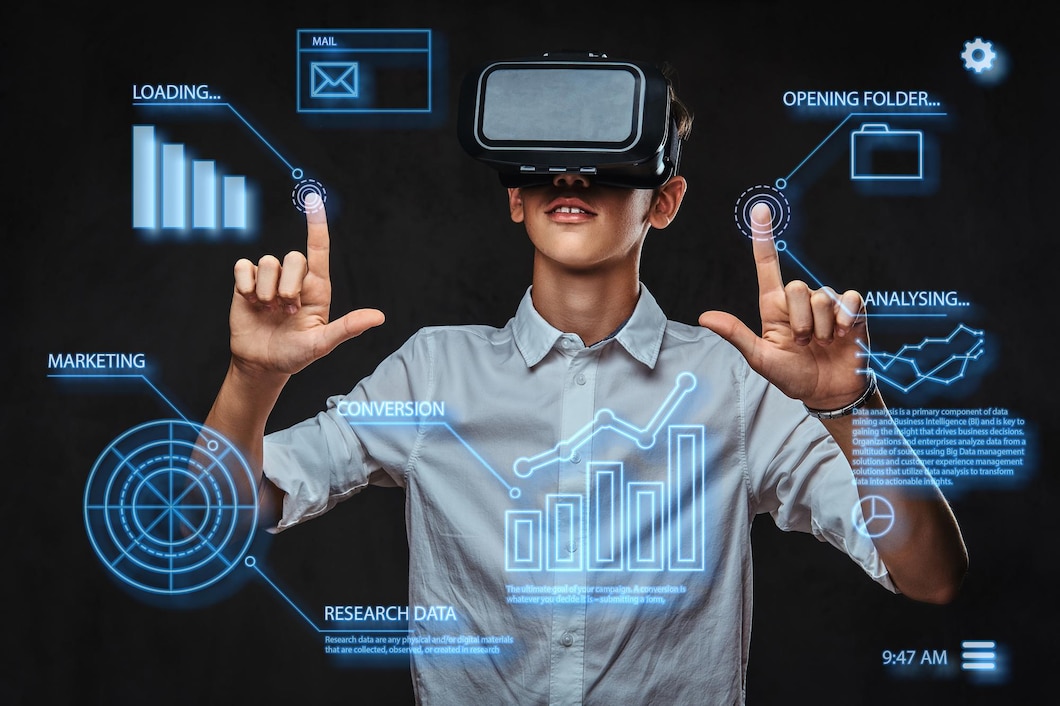
Artificial Intelligence (AI) is no longer a futuristic concept—it is a present-day reality that is transforming industries across the globe. One of the sectors experiencing the most significant change is digital marketing. From personalized customer experiences to automated advertising strategies, AI is reshaping how businesses connect with their audiences. For marketers, understanding and leveraging AI is no longer optional; it is essential for staying competitive in an increasingly data-driven world.
The Rise of AI in Digital Marketing
Over the past decade, digital marketing has evolved from simple email campaigns and banner ads to highly sophisticated strategies driven by data analytics and user behavior. AI has accelerated this evolution by enabling marketers to process vast amounts of data quickly and accurately. Machine learning algorithms can analyze customer interactions, preferences, and behaviors in real-time, allowing businesses to make smarter marketing decisions.
AI tools are now widely used in areas such as search engine optimization (SEO), content creation, customer service, and social media marketing. These technologies not only save time but also improve the efficiency and effectiveness of marketing campaigns.
Personalized Customer Experiences
One of the most significant ways AI is changing digital marketing is through personalization. Modern consumers expect brands to understand their needs and deliver relevant content. AI makes this possible by analyzing user data such as browsing history, purchase behavior, and demographic information.
For example, AI-powered recommendation engines can suggest products or services tailored to individual users. This level of personalization increases engagement, improves customer satisfaction, and boosts conversion rates. Email marketing campaigns also benefit from AI by delivering personalized subject lines, content, and send times, resulting in higher open and click-through rates.
Smarter Content Creation
Content is at the heart of digital marketing, and AI is revolutionizing how it is created and distributed. AI-powered tools can generate blog posts, social media captions, product descriptions, and even video scripts. While human creativity remains important, AI can assist by providing ideas, optimizing content for SEO, and ensuring consistency.
Additionally, AI can analyze which types of content perform best with specific audiences. This allows marketers to create more targeted and effective content strategies. By understanding what resonates with users, businesses can produce content that drives traffic and engagement.
Enhanced Data Analysis and Insights
Data is one of the most valuable assets in digital marketing, but analyzing large datasets can be challenging. AI simplifies this process by identifying patterns and trends that might be difficult for humans to detect. This enables marketers to gain deeper insights into customer behavior and campaign performance.
Predictive analytics, powered by AI, allows businesses to anticipate future trends and customer actions. For instance, AI can predict which leads are most likely to convert or which customers are at risk of leaving. This information helps marketers make proactive decisions and optimize their strategies.
Automation of Marketing Tasks
AI is also transforming digital marketing through automation. Repetitive tasks such as email scheduling, social media posting, and ad management can now be handled by AI tools. This not only saves time but also reduces the risk of human error.
Marketing automation platforms use AI to segment audiences, deliver targeted messages, and track performance. Chatbots are another example of AI-driven automation. They provide instant responses to customer inquiries, improving user experience and freeing up human resources for more complex tasks.
Improved Advertising Strategies
Digital advertising has become more sophisticated with the integration of AI. Programmatic advertising, for example, uses AI to automate the buying and placement of ads in real-time. This ensures that ads are shown to the right audience at the right time, maximizing return on investment (ROI).
AI also helps in optimizing ad performance by analyzing metrics such as click-through rates, conversions, and user engagement. Marketers can use this data to adjust their campaigns and improve results. Additionally, AI can test multiple ad variations to determine which ones perform best, a process known as A/B testing.
Voice Search and AI Assistants
The rise of voice search is another area where AI is making an impact. With the increasing use of smart devices, more people are using voice commands to search for information online. This has changed how marketers approach SEO and content creation.
AI-powered voice assistants rely on natural language processing (NLP) to understand user queries. As a result, marketers need to focus on conversational keywords and long-tail phrases. Optimizing content for voice search can help businesses reach a broader audience and stay ahead of the competition.
Social Media Marketing Transformation
Social media platforms generate massive amounts of data, making them ideal for AI-driven marketing. AI tools can analyze user interactions, identify trends, and suggest the best times to post content. This helps businesses maximize their reach and engagement.
AI is also used for sentiment analysis, which allows marketers to understand how users feel about their brand. By analyzing comments, reviews, and mentions, businesses can identify potential issues and respond quickly. This improves brand reputation and customer trust.
Customer Journey Optimization
Understanding the customer journey is crucial for effective marketing, and AI makes this process more accurate and efficient. AI can track user interactions across multiple channels, providing a comprehensive view of the customer journey.
This information helps marketers identify pain points and optimize the user experience. For example, if customers frequently abandon their shopping carts, AI can suggest strategies to improve the checkout process. By addressing these issues, businesses can increase conversions and customer retention.
Challenges of AI in Digital Marketing
Despite its many benefits, AI also presents challenges. One of the main concerns is data privacy. As AI relies heavily on user data, businesses must ensure that they comply with data protection regulations and maintain customer trust.
Another challenge is the lack of human touch. While AI can automate many tasks, it cannot fully replace human creativity and emotional intelligence. Marketers must find a balance between automation and personalization to create meaningful connections with their audience.
Additionally, implementing AI technologies can be costly and complex, especially for small businesses. However, as AI becomes more accessible, these barriers are gradually decreasing.
The Future of AI in Digital Marketing
The future of digital marketing is closely tied to the advancement of AI. As technology continues to evolve, we can expect even more innovative applications of AI in marketing. From advanced predictive analytics to hyper-personalized experiences, the possibilities are endless.
AI will also play a key role in emerging technologies such as augmented reality (AR) and virtual reality (VR), creating immersive marketing experiences. Businesses that embrace AI early will have a significant advantage in the competitive digital landscape.
Conclusion
AI is fundamentally changing the way digital marketing operates. By enabling personalization, improving data analysis, automating tasks, and enhancing customer experiences, AI has become an indispensable tool for marketers. While challenges exist, the benefits far outweigh the drawbacks.
For businesses looking to succeed in the digital age, adopting AI-driven strategies is no longer optional—it is a necessity. As AI continues to evolve, it will open new opportunities for innovation and growth, making digital marketing more efficient, effective, and customer-centric than ever before.