
Part 1 — The Man on My Porch
The man standing on my porch looked nothing like the hungry little boy I remembered.
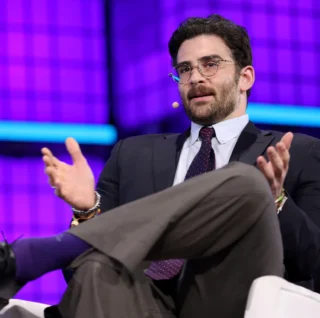
He was tall now, broad-shouldered, dressed in a dark navy suit that probably cost more than my first car. There were faint lines around his eyes, and a few strands of gray had already appeared near his temples.
But then he lifted one hand and ran it through his hair.
My breath caught.
Twenty years disappeared in a heartbeat.
I knew that nervous gesture.
I had watched a skinny eight-year-old boy do it whenever he was afraid to ask for another cookie.
I had watched a thirteen-year-old do it before telling me he’d gotten his first C in math.
I had watched an eighteen-year-old do it the night before he left for college.
I pressed the button on my Ring doorbell.
“Dylan?”
His eyes lifted toward the camera.
For several seconds, he said nothing.
Then he gave a small nod.
“Yes, Mrs. Holland.”
My knees nearly gave out.
I unlocked the door so quickly that I almost dropped my keys.
When I opened it, we simply stared at each other.
Twenty years.
Twenty years without a phone call.
Without a Christmas card.
Without an explanation.
Without the answer to the question that had haunted me through birthdays, holidays, sleepless nights, and eventually my husband’s funeral.
Why had the boy I loved like a son stolen from me and disappeared?
But standing there, I realized something strange.
I wasn’t angry.
Not anymore.
“Dylan,” I whispered.
I stepped toward him instinctively, ready to hug him.
He didn’t move.
That stopped me.
His expression wasn’t warm.
It wasn’t angry, either.
It was almost… afraid.
In his arms was a large black box.
“I only came to give you this,” he said.
He held it toward me.
“What is it?”
“You need to see it.”
The box was much heavier than I expected.
For one foolish second, hope rushed through me.
My mother’s ring.
My grandmother’s pearl earrings.
The gold necklace my father had given me on my twenty-first birthday.
Maybe Dylan had kept everything.
Maybe this was his way of returning what he’d taken.
I lifted the lid.
The first thing I saw was a photograph.
Nothing inside that box belonged to me.
And yet the second I picked up that photograph, I recognized the man in it.
My husband.
Richard.
He was twenty years younger, smiling at the camera.
And in his arms was a newborn baby.
On the back, someone had written:
Richard and Dylan — November 1984.
My fingers went numb.
Underneath the photograph were dozens of letters tied with a faded blue ribbon.
All of them were signed by my husband.
I pulled out the first one.
Then another.
Then I saw a sentence that made the box slip from my hands.
Margaret can never know Dylan is mine.
The box crashed onto the porch.
Letters scattered around my feet.
And suddenly, after twenty years, I understood why my husband had never wanted that little boy inside our home.
Part 2 — The Boy Across the Street
I first met Dylan on one of the coldest afternoons I can remember.
It had snowed the night before, and although the sidewalks had been cleared, dirty piles of snow still lined the street.
I was bringing groceries in when I noticed a small figure sitting on the curb across from my house.
A boy.
He couldn’t have been more than eight.
He had his knees pulled to his chest and his hands tucked inside the sleeves of a thin jacket.
At first, I assumed he was waiting for someone.
Twenty minutes later, after I’d put away my groceries, I looked through the window.
He was still there.
So I put on my coat and walked across the street.
“Are you all right?”
He looked up suspiciously.
He had brown hair that refused to stay flat and the most serious green eyes I’d ever seen on a child.
“I’m fine.”
“You’re freezing.”
“I’m not.”
His teeth literally chattered as he said it.
I smiled.
“Would you like to come inside and have some tea?”
He hesitated.
“Are you hungry?”
That got his attention.
“Tea would be nice,” he said carefully.
Then, after a pause, he added, “And maybe some cookies, please.”
That was Dylan.
Polite even when starving.
His family had moved into the house next door a few months earlier. His mother, Carol, was quiet and reserved. His father, Mark, worked long hours and rarely spoke to anyone.
They weren’t cruel people.
At least, not in any way I could prove.
They simply believed very strongly in discipline.
Especially when it came to food.
Carol had read somewhere that sugar was terrible for children. Then she decided processed food was bad. Then dairy. Then anything fried.
Before long, Dylan’s meals seemed to consist entirely of vegetables, lentils, brown rice, and things with names I couldn’t pronounce.
He wasn’t starving.
But he was always hungry.
The first time I gave him a chocolate-chip cookie, he stared at it like I’d handed him a bar of gold.
“Can I really eat it?”
“That’s usually what people do with cookies.”
His mouth twitched.
He took one bite.
Then closed his eyes.
I laughed so hard I nearly spilled my tea.
From then on, Dylan started appearing more often.
Never demanding.
Never expecting.
Sometimes he’d knock and ask whether I needed help bringing in groceries.
During summer vacation, he once appeared holding our old lawn mower.
“I’ll mow your whole yard for a Hershey bar.”
“You are not mowing my lawn for chocolate.”
“Two Hershey bars?”
“Dylan.”
“One Hershey bar and a Coke?”
I laughed.
“Put the mower away and come inside.”
I never made him work for food.
But as he grew older, he began helping me anyway.
He carried groceries.
Raked leaves.
Changed lightbulbs.
Cleaned gutters once I was too afraid to let Richard climb the ladder.
By twelve, he could fix a loose cabinet hinge.
By fifteen, he knew where I kept every tool in the garage.
And every Friday night that his parents allowed it, we ate pizza.
Sometimes pepperoni.
Sometimes sausage.
Sometimes so much extra cheese that Carol would probably have fainted if she’d seen it.
Dylan and I sat on the living room floor watching cartoons long after he was supposedly too old for them.
And we talked.
About teachers.
Girls.
Baseball.
College.
Fear.
Dreams.
Everything.
I’d never had children.
Richard and I had tried for years.
Doctors.
Procedures.
Hope.
Disappointment.
Eventually, we stopped talking about it because every conversation seemed to reopen something that had barely healed.
Then Dylan came along.
I knew he wasn’t mine.
I never pretended otherwise.
But slowly, almost without realizing it, I began saving things to tell him.
Funny stories.
Recipes.
Advice.
I’d see something at the grocery store and think, Dylan would like that.
I’d hear the school bus and glance automatically toward the window.
He became part of my life.
The son I’d never been lucky enough to have.
Richard hated it.
Part 3 — My Husband’s Warning
“This is getting ridiculous,” Richard said one night.
Dylan had just gone home after helping me put up Christmas lights.
“What is?”
“You know what.”
I continued folding a blanket.
“He’s a kid, Richard.”
“He’s not our kid.”
“I never said he was.”
“You don’t have to.”
His tone irritated me.
“Dylan isn’t hurting anybody.”
“You’re feeding him constantly. His parents are going to accuse us of interfering.”
“They know he’s here.”
“That’s not the point.”
“Then what is?”
Richard looked toward the window.
For a moment, something passed across his face.
Fear, maybe.
But it vanished so quickly I convinced myself I’d imagined it.
“We can’t afford to feed somebody else’s kid every day.”
It was a ridiculous argument.
Richard and I weren’t wealthy, but we were comfortable.
A few extra slices of pizza weren’t going to bankrupt us.
“He’s hungry,” I said.
“He has food at home.”
“You’ve seen what they feed him.”
“Then that’s their business.”
“He likes being here.”
Richard’s jaw tightened.
“That’s exactly what worries me.”
At the time, I thought he was jealous.
Richard had never been particularly affectionate.
He was a man of routines.
Work.
Dinner.
Television.
Bed.
He could be charming when he wanted to be, but warmth didn’t come naturally to him.
Dylan, on the other hand, filled our house with noise.
Laughter.
Questions.
Cartoons.
Music.
Life.
I assumed Richard resented the disruption.
There were moments that should have made me wonder, though.
Once, when Dylan was about fourteen, I found Richard standing in the hallway staring at him while he slept on our couch after a movie marathon.
Richard’s face looked strangely pale.
“What?” I whispered.
“Nothing.”
“You look like you’ve seen a ghost.”
He turned away.
“Sometimes I think you care more about that boy than you do about me.”
I should have asked more questions.
I didn’t.
Instead, I kissed his cheek and told him he was being silly.
Years passed.
Dylan became a handsome young man.
People often joked that teenagers stopped talking to adults, but Dylan never stopped talking to me.
Then came his senior year.
He had been accepted into a university nearly four hours away.
I was proud of him.
I was also heartbroken.
The night before he left, we had one final pizza night.
I bought everything he had been forbidden to eat as a child.
Pepperoni pizza.
Barbecue chips.
Chocolate ice cream.
Root beer.
He laughed when he saw the table.
“Mrs. Holland, are you trying to kill me before college?”
“If you survived your mother’s kale smoothies, you’ll survive this.”
We stayed up watching the same old cartoons we’d watched when he was nine.
But something was wrong.
Dylan was quieter than usual.
Twice, I caught him staring at Richard.
Near midnight, Richard went upstairs.
Dylan and I were alone.
He picked at the label on his root beer bottle.
“Can I ask you something?”
“Always.”
He ran his hand through his hair.
“If someone you loved had lied to you about something important… would you want to know?”
I thought about it.
“Yes.”
“Even if it hurt?”
“Especially then.”
He stared at me.
For one terrible second, I thought he might cry.
“What’s going on, sweetheart?”
He opened his mouth.
Then footsteps sounded on the stairs.
Richard appeared.
Dylan immediately looked away.
“It’s late,” Richard said.
There was something cold in his voice.
Dylan stood.
“Yeah. I should go.”
I hugged him tightly at the door.
“Call me when you get settled.”
“I will.”
“Promise?”
He looked over my shoulder.
Richard was standing behind me.
Dylan swallowed.
“Promise.”
Those were the last words he said to me for twenty years.
Part 4 — The Empty Jewelry Box
The next morning, I woke later than usual.
Richard was already downstairs.
When I looked through the bedroom window, the driveway next door was empty.
Carol and Mark had planned to drive Dylan to college, then continue on to visit relatives for several weeks.
Their truck was gone.
I remember feeling an ache in my chest.
My boy was gone.
Then I walked toward my dresser.
My jewelry box was open.
At first, my mind refused to understand what I was seeing.
I lifted the tray.
Empty.
My mother’s ring was gone.
My grandmother’s pearl earrings.
Three necklaces.
Two bracelets.
A pair of diamond studs Richard had given me for our tenth anniversary.
I started opening drawers.
The emergency cash envelope was gone too.
“Richard!”
He appeared in the doorway.
He looked at the mess.
Then he looked at me.
His expression hardened.
“Told you so.”
I stared at him.
“No.”
“Margaret.”
“No.”
“Who else was here?”
“Dylan wouldn’t—”
“He knows this house better than anyone.”
I felt sick.
“Maybe I moved them.”
“You didn’t.”
“Maybe—”
“Stop making excuses for him!”
His voice shook the room.
I stared at my husband.
He lowered his voice.
“I warned you. You let a stranger into our home for ten years because you were desperate to pretend he was your son.”
That sentence hurt more than the missing jewelry.
I turned away.
“We should call the police,” he said.
“No.”
Richard looked surprised.
“I’m not ruining that boy’s future unless I know.”
“Margaret—”
“I said no.”
Maybe part of me already knew something didn’t fit.
Dylan could have taken money.
He could have taken jewelry.
People we love sometimes disappoint us.
But why take my grandmother’s earrings?
He knew their story.
He had once watched me cry while I explained that she’d worn them on her wedding day.
And if Dylan wanted money, he could have asked me.
He never had.
Not once.
Richard kept pushing me to report him.
I refused.
Eventually, he stopped.
But whenever I mentioned Dylan, Richard’s expression became hard.
“Forget him.”
Over time, I learned to stop saying the name.
No call ever came.
No letter.
Nothing.
At first, I checked the mailbox every afternoon.
Then once a week.
Then only around Christmas.
Years passed.
Dylan’s parents eventually sold their house.
Richard and I grew older.
Our marriage became quieter.
Not terrible.
Not wonderful.
Just quiet.
When Richard died three years ago after a long illness, I mourned him.
Whatever problems we’d had, he’d been my husband for more than forty years.
I thought I knew everything important about the man I’d buried.
Then Dylan appeared on my porch carrying that black box.
And my entire marriage cracked open.
Part 5 — The Secret Inside the Box
I couldn’t take my eyes off the photograph.
Richard.
Carol.
Baby Dylan.
My husband was holding that baby with a tenderness I had almost never seen on his face.
“Dylan…”
My voice barely worked.
“I’m sorry,” he said.
“What is this?”
“My mother died six weeks ago.”
“I’m sorry.”
“Thank you. My dad died five years ago. After Mom’s funeral, I started cleaning out her house.”
He looked down at the scattered letters.
“I found that box hidden behind old blankets in her closet.”
I picked up another photograph.
Carol was younger, maybe twenty-five.
Richard stood beside her.
His arm was around her waist.
“What are you telling me?”
Dylan closed his eyes briefly.
“Richard Holland was my biological father.”
I gripped the doorframe.
The world seemed to tilt.
“No.”
“I didn’t believe it either.”
“No.”
“My mother told me the night before I left for college.”
I stared at him.
Suddenly I was back in my living room.
If someone you loved had lied to you about something important… would you want to know?
“Oh my God.”
“I came to your house that night because I planned to tell you.”
My eyes filled with tears.
“But you didn’t.”
“I couldn’t.”
“Why?”
Dylan looked toward the hallway behind me, almost as though Richard might still appear.
“Because he stopped me.”
Dylan told me what had happened after I closed the door that final night.
Richard had followed him outside.
At the edge of our driveway, he called Dylan’s name.
Then he told him everything.
Carol and Richard had been involved briefly many years earlier during a period when Carol and Mark had separated.
Mark and Carol reconciled before Dylan was born.
Mark knew Dylan might not be biologically his.
He chose to raise him anyway.
Richard, however, had spent eighteen years terrified that I would find out.
“You were going to tell her,” Richard had said.
Dylan admitted he was.
According to Dylan, Richard grabbed his arm.
“You have no idea what you’ll do to her.”
“She deserves the truth.”
“You think she wants you after she finds out what you represent?”
Dylan had frozen.
Richard continued.
“Margaret spent years trying to have a child. Years. And you think she wants to learn her husband had one with somebody else?”
Dylan was eighteen.
Confused.
Terrified.
But he still told Richard he was going to talk to me.
So Richard changed tactics.
“He told me you’d never believe me,” Dylan said.
I shook my head.
“I would have.”
“I know that now.”
“What happened the next morning?”
Dylan looked at me.
“He came to our house before we left.”
A cold sensation moved through my body.
“He told me something had been stolen from your bedroom.”
I stopped breathing.
“He said your jewelry was missing. He said because I’d been in your house constantly, everyone would assume I’d done it.”
“No.”
“He said my fingerprints were everywhere. He said if I came near you again, he’d call the police.”
I covered my mouth.
“But why didn’t you tell your mother?”
“I did.”
“And?”
Dylan pointed at the letters.
“She already knew what kind of man he could be.”
I picked up one envelope.
The date was twenty years earlier.
Two days after Dylan had left.
Inside was a letter from Richard to Carol.
I read it.
Then read it again.
There, in my husband’s handwriting, were the words that destroyed the version of my past I’d believed for two decades.
I handled Margaret. She thinks Dylan took the jewelry. I hated doing it, but I couldn’t let him destroy my marriage. Keep him away from her and this ends here.
My legs gave out.
Dylan caught my arm.
“Mrs. Holland!”
He helped me into the chair beside the front door.
I couldn’t cry yet.
I was too shocked.
“He stole from me.”
Dylan nodded slowly.
“The jewelry?”
“Yes.”
“Did your mother know?”
“Not at first. There’s another letter.”
I didn’t want to read it.
But I did.
Richard admitted he had taken the jewelry after Dylan left our house.
He’d sold most of it weeks later.
Not because he needed money.
Not because we were broke.
He had done it because he needed something powerful enough to destroy my trust in Dylan.
My husband had taken my mother’s ring.
My grandmother’s earrings.
Things no amount of money could replace.
And he’d sacrificed them to bury his secret.
For twenty years, I’d believed Dylan betrayed me.
For twenty years, Dylan had believed I hated him.
Richard hadn’t simply stolen jewelry.
He had stolen two decades from both of us.
Part 6 — The Question Dylan Had Waited Twenty Years to Ask
“I should have come sooner,” Dylan said.
I looked at him.
“Why didn’t you?”
His answer wasn’t defensive.
It was almost childlike.
“Because I was scared.”
“Of Richard?”
“At first.”
“And later?”
He hesitated.
“Of you.”
That broke something in me.
“Me?”
“He told me you believed I stole from you. He said you never wanted to see me again.”
“I never said that.”
“I know.”
“I waited for you to call.”
His eyes reddened.
“I waited for you to call too.”
We stared at each other.
Two people who had spent twenty years waiting because one man had convinced each of us that the other had turned away.
Dylan sat on the porch step.
“For years, I thought about showing up. I’d drive near this neighborhood whenever I was back in town.”
“You came here?”
“Twice.”
My heart twisted.
“I never got out of the car.”
“Why?”
“Because I kept hearing Richard’s voice telling me you knew everything and didn’t want me.”
I closed my eyes.
“Dylan, I forgave you years ago.”
He looked confused.
“I thought you stole from me, and I still forgave you.”
His face crumpled slightly.
“I didn’t care about the jewelry anymore. I cared that you were alive. I cared whether you’d finished college. Whether you were happy. Whether someone was feeding you something besides kale.”
He laughed.
It came out mixed with a sob.
And just like that, I heard the little boy again.
“Did you finish college?”
He nodded.
“Architecture.”
“I knew it.”
“You did not.”
“You fixed my cabinets when you were thirteen.”
That made him laugh harder.
I reached out.
This time, he let me pull him into my arms.
For several seconds, Dylan stood stiffly.
Then his arms wrapped around me.
He buried his face against my shoulder.
Twenty years disappeared.
I wasn’t holding a successful forty-year-old man.
I was holding the boy from across the street.
The boy who’d asked for cookies.
The boy who’d mowed my lawn for chocolate.
The boy who’d sat beside me watching cartoons.
And I cried for him.
For myself.
For all the Christmases we’d missed.
All the birthdays.
All the ordinary Tuesdays that could have belonged to us.
“I’m sorry,” Dylan whispered.
“No.”
“I should have been braver.”
“You were eighteen.”
“I should have told you.”
“And I should have trusted what I knew about you.”
He pulled away.
“There was one more reason I came.”
I looked toward the black box.
“I don’t think I can survive another letter.”
He smiled faintly.
“It’s not in the box.”
He reached into his jacket and pulled out his phone.
Then he showed me a photograph.
A woman stood beside him.
She had dark curly hair and a wide smile.
Two children were in front of them, a boy who looked about eleven and a little girl around eight.
“My wife, Rachel,” he said. “And those are Noah and Sophie.”
I touched the screen.
“You have children.”
“Two.”
The tears came again.
Dylan smiled.
“Every Friday night, we order pizza.”
I laughed through my tears.
“Do they know why?”
“They know there’s a woman who taught their dad that pizza tastes better when somebody actually wants you at the table.”
I covered my mouth.
Then Dylan added softly, “They also know about you.”
I looked up.
“What?”
“I’ve told them stories about you their whole lives.”
“Even when you thought I hated you?”
“I couldn’t make myself hate you back.”
I closed my eyes.
Some sentences heal things you didn’t realize were still bleeding.
That was one of them.
Part 7 — What Richard Couldn’t Take
Dylan stayed for three hours.
We sat at my kitchen table, the same place where he’d done homework as a boy.
I made coffee.
He found the mugs without asking.
“Still the same cabinet,” he said.
“Some things don’t change.”
He smiled sadly.
We talked about Richard.
About Carol.
About Mark, the man Dylan still called Dad without hesitation.
“He knew I might not be biologically his,” Dylan explained. “But he never treated me differently. He wasn’t great at showing affection, and the food rules were mostly Mom’s obsession, but he loved me.”
“I’m glad.”
“I don’t want Richard being my biological father to erase my dad.”
“It doesn’t.”
Dylan nodded.
“Biology explains where you came from. It doesn’t decide who showed up.”
I realized as I said it that the same was true for us.
I wasn’t Dylan’s mother.
I never would be.
Carol had been his mother.
Mark had been his father.
But there had also been room in Dylan’s childhood for me.
Family didn’t always fit neatly into the boxes people built for it.
Sometimes family was a plate of cookies on a freezing afternoon.
Sometimes it was a teenager changing a lightbulb.
Sometimes it was a lonely woman keeping root beer in her refrigerator because the boy next door liked it.
And sometimes it was returning after twenty years because the truth finally gave you permission to knock on a door you’d been afraid to approach.
Before Dylan left, he gathered the letters.
“You can keep them.”
I looked at the black box.
“No.”
“Are you sure?”
“I don’t need to spend the rest of my life reading Richard’s excuses.”
“What do you want me to do with them?”
I thought for a moment.
“Keep the photographs if you want them. They’re part of your history.”
“And the letters?”
“Whatever gives you peace.”
He nodded.
I picked up the photograph of Richard holding him as a baby.
For years, I’d believed the greatest tragedy of my marriage was that Richard and I hadn’t been able to have children.
Now I understood how cruelly complicated the truth had been.
Richard had a son.
And that son had somehow found his way into my life anyway.
Maybe that was why Richard had always looked frightened when Dylan was near.
Every Friday night.
Every Christmas.
Every laugh coming from our living room.
He’d watched his secret sit at my table.
He’d watched me love the child he’d hidden from me.
And instead of telling the truth, he’d destroyed the relationship.
At least, he’d tried to.
Richard succeeded for twenty years.
But not forever.
There are lies that can divide people.
There are lies that can steal years.
But some bonds survive even when nobody is there to protect them.
Part 8 — Friday Night
The following Friday, my doorbell rang at exactly six.
When I opened the door, Dylan was standing there again.
This time he wasn’t wearing a suit.
He had jeans on and an old college sweatshirt.
And he wasn’t alone.
Beside him stood Rachel.
Behind them were Noah and Sophie.
Sophie was holding a pizza box nearly as wide as her arms.
“Hi,” she said. “Dad says you’re the reason he puts way too much cheese on pizza.”
Dylan looked offended.
“There is no such thing as too much cheese.”
“There absolutely is,” Rachel said.
I laughed.
Noah held up a grocery bag.
“We also brought root beer.”
I stepped back.
“Well, then you’d better come inside.”
They did.
The house changed instantly.
Shoes near the door.
Voices in the hallway.
Children arguing over which movie to watch.
Pizza on the coffee table.
Napkins everywhere.
At one point Sophie disappeared into the kitchen and returned holding a package she’d discovered in my pantry.
“Are these chocolate-chip cookies?”
I looked at Dylan.
He looked at me.
For a second, neither of us said anything.
Then I smiled.
“Would you like one?”
Sophie glanced at her father.
“Can I?”
Dylan laughed.
“That’s usually what people do with cookies.”
I stared at him.
It was exactly what I’d told him thirty-two years earlier.
He remembered.
Of course he remembered.
Later that evening, while the children watched a movie, Dylan and I stood in the kitchen.
“I’m sorry we lost so much time,” I told him.
“Me too.”
“I keep thinking about everything we missed.”
He was quiet for a moment.
Then he said, “We can’t fix the twenty years.”
“No.”
“But we can decide what happens with the next twenty.”
I looked into the living room.
Sophie was laughing.
Noah was reaching for another slice of pizza.
Rachel was trying unsuccessfully to stop him.
The house hadn’t sounded this alive in years.
And for the first time since Richard’s death, I didn’t feel like I was living inside a museum of my past.
I felt present.
I looked at Dylan.
“Are you free next Friday?”
He smiled.
“I think we can make room.”
“Good.”
He started to walk away, then stopped.
“Mrs. Holland?”
“Yes?”
“You know you can call me Dylan.”
“I’ve been calling you Dylan since you were eight.”
He laughed.
“No. I mean… you don’t have to treat me like a guest.”
My throat tightened.
“You were never a guest.”
He nodded.
“I know that now.”
That night, after everyone left, I stood alone on my porch.
Across the street, the house where Dylan had grown up had different curtains now. Different cars in the driveway. Different children probably slept inside.
Time had changed almost everything.
I thought about Richard.
I thought about the jewelry I’d never get back.
For years, I’d believed those missing pieces were the greatest loss from that morning.
They weren’t.
My grandmother’s earrings had been precious.
My mother’s ring had been irreplaceable.
But objects, even cherished ones, are still objects.
The real thing Richard stole was time.
Twenty birthdays.
Twenty Christmas mornings.
Twenty years of phone calls that never happened.
Twenty years in which Dylan became a husband, a father, and a man while I knew nothing about it.
I could have let that knowledge make me bitter.
Maybe once, it would have.
But I was seventy-one years old.
I had finally learned something Richard never had.
The truth doesn’t always arrive when you want it.
Sometimes it comes twenty years late, wearing a dark suit and carrying a black box.
Sometimes it breaks your heart before it sets you free.
But when it finally stands on your porch, you have a choice.
You can spend the rest of your life staring backward at everything that was stolen.
Or you can open the door.
The next morning, I moved the extra dining chairs out of storage.
I bought root beer.
I added chocolate-chip cookies to my grocery list.
And on Friday afternoon, I ordered two large pizzas.
One pepperoni.
One with so much extra cheese that Carol would have been horrified.
At six o’clock, the doorbell rang.
Before I even reached the hallway, I heard Sophie shouting from the porch.
“Grandma Margaret! We brought dessert!”
I stopped.
My hand froze on the doorknob.
Grandma Margaret.
No one had ever called me that before.
For most of my life, I thought becoming a mother—or a grandmother—was something biology had decided I would never experience.
But life is strange.
Sometimes the child meant to become part of your family doesn’t arrive in a hospital room.
Sometimes he appears across the street on a freezing afternoon, hungry and pretending he isn’t cold.
Sometimes all you have to do is notice him.
Feed him.
Listen to him.
Love him.
And even if twenty years of lies separate you, somehow, if you’re very lucky, he finds his way back.
I opened the door.
Dylan stood behind his daughter, carrying the pizza.
This time, there was no black box between us.
Only dinner.
Family.
And all the years we still had left.